



How news is currently being consumed
| Share of respondents | |
|---|---|
| Direct entry | 32% |
| Search | 25% |
| Social media | 23% |
| 6% | |
| Mobile alerts | 5% |
| Aggregators | 5% |
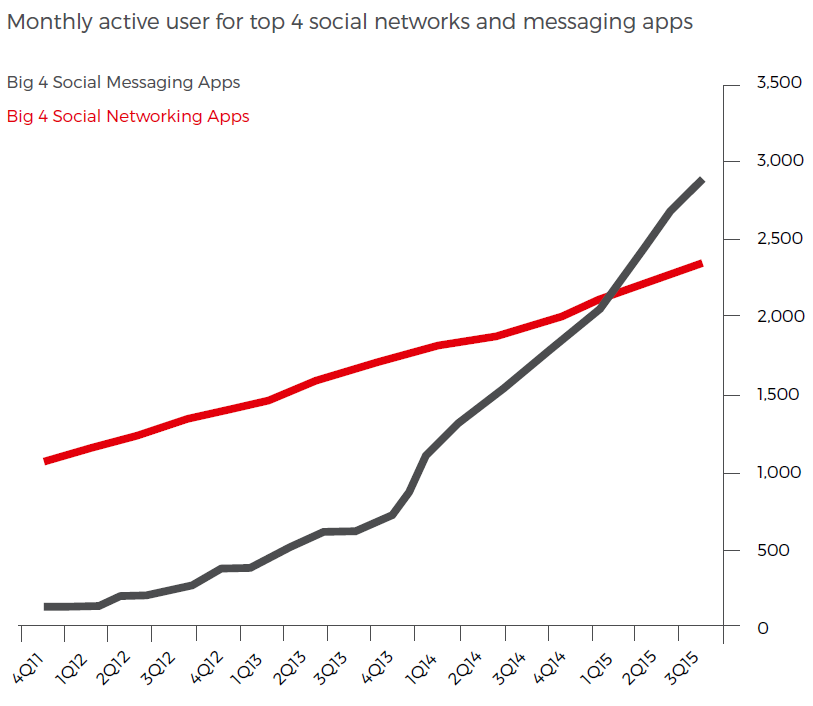
The statistic table outlined above, from the 2017 Reuters Institute Digital News Report, shows how users found news stories online. 23 percent of 66,230 respondents stated that the main way that they came across news during the last week was through social media. But the usage is flattening with messaging apps outpacing the number of active users.
- NewsDog – A news mobile aggregator app from China that has found success in India. It has recently received $50 million in funding from Tencent to further penetrate the market. ‘WeMedia’ is its platform where writers can publish news and make money.
- inkl – It brings together the most respectable publishers in one place. inkl can be purchased on a per-article basis or as a one-off subscription.
- Blendle – Originating from the Netherlands, Blendle also aggregates content from leading publishers on a per article basis.
- Metaplus – An AI-powered news platform focusing on tech and crypto news.
- Guru News – It is free and highly curated news app.
- Inside – A curated email newsletter which is built as per topic on demand.
- Apple News – Apple’s platform news features breaking news notifications and subscriptions to some of your favorite publications. Recent user growth and flexibility in ad management has online publishers flocked to the platform.
- Google Play Newsstand – A platform which curates news apps within Google Play.
- Feedly – It is available across all platforms. Feedly uses RSS, social media, and web search to provide personalized content to users.
- News360 – News360 is a personalized news aggregation app for smartphones, tablets, and the web. It attempts to learn a user’s interests by analyzing their behavior and activity on social media and using semantic and natural language processing.
- News Republic – It uses a combination of editorial, community, and algorithms to deliver new content discoverability.
- Inoreader – A freemium newsreader that allows you to read your web content and RSS feed all in one place.
- theScore – It offers data-driven news and sports stats.
- Dailyhunt – Using AI, machine learning, and deep learning, DailyHunt has become one of the largest Indian news aggregators and e-book readers that personalizes your content experience.
- Toutiao – A Beijing-based news and information content platform that uses algorithms to develop a personalized feed list. It is one of China’s largest news aggregators with 120 million active users, as of September 2017.
- NewsPicks (the US and Japan editions) – An influencer focused news app that allows you to read and see the stories that leading experts are consuming.
- NewsPress – This AI and social media news aggregator has been able to uncover stories faster than a leading Japanese organization having its newsroom staffed with engineers.
- Snapchat Discover – Shows stories from branded profiles that particularly resonate with millennials.
 Pricing models for news aggregator startups appear to be mixed, but, without trying to over-generalize, there are:
- News aggregators and apps that have partnerships with other leading digital media organizations for a per article or monthly subscription on a reader platform.
- Freemium tool subscription providers with the ability for the user to add their own sources on a reader platform.
- News aggregators with ad monetization and contributor revenue sharing overlaid with AI and deep learning technology for personalized news content.
Content and Asia in Artificial intelligence are leading the charge in news aggregation adoption
There have been implications in having individual platforms or individuals providing recounts of their own stories (source: Reuters Institute Digital News Report). So, we are seeing more people being comfortable in having algorithms showing content from multiple sources. And Reuters study actually shows that, as a result, readers have more exposure to different sources which can lead users to look for related or global topics, as opposed to the universal filtered approach that social networks have in place. Both in terms of investment and population, Asia is leading the pack in Artificial Intelligence (AI). As per the reports, by 2030 AI will account for 26% and 10.4% of the GDP of China and developed Asia, respectively. The Global Economic Forum also estimates that China will close the gap on the US in AI technology and expertise within the next 10 years.
Source: PwC – Sizing the Prize
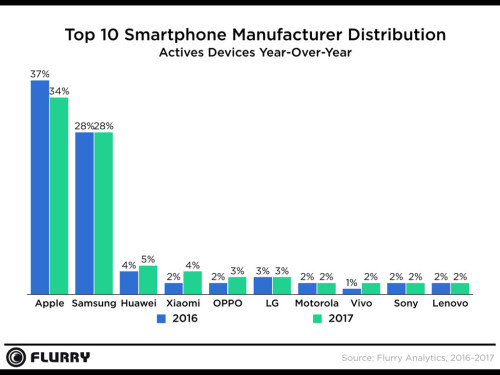
China, India, Japan, South Korea, and Taiwan are making great investment strides in growing their smartphone and mobile hardware infrastructure (76% of active smartphone devices are from Asian based manufacturers) whilst catching up in AI. And it’s clearly paying off in aggregation and mobile alerts adoption (the below table doesn’t include survey data from China and India).
Will a Spotify for News Distribution Solution Work?