


Ronald Barba is the director of content & community at HealthCare.com. His most recent project involved strategy and editing for TheBridgeBK.com, Brooklyn-focused publication aimed at highlighting entrepreneur and business trend stories in New York’s most creative borough. Prior to running content at HealthCare.com, he was managing editor at Tech.Co. He’s a long-time freelance writer & editor who’s had works published in The Economist, Entrepreneur, Forbes, Inc., BuzzFeed, Slate, and other publications.
 I usually wake up around 5 AM and start my day off at the gym. Before I head to work, I’ll take my dog on a 30-minute walk around a local park. Depending on the weather, I’ll ride my bike or take the subway to HealthCare.com’s office in Lower Manhattan. Once I’m in the office, I’ll respond to emails, and then look through my schedule for the day. From there, I focus on everything that’s on that day’s to-do, whether it’s doing keyword research and data analysis to look at key topics for my team to write about, or simply editing pieces in my backlog.
 Productivity-wise, I use pen and paper to list my to-dos for the day, using a bullet journal format (with each separate bullet point counting as a task; priority tasks designated with a circled bullet point; in-progress tasks with the bullet point half-crossed off; completed tasks with the bullet point fully crossed-off; and tasks I couldn’t get to marked with a line crossing it out fully). I also am a firm practitioner of the Pomodoro Technique, so I use a minimal Pomodoro counter called Be Focused (available for MacOS and iOS).
I live in New York, so there are definitely times when I feel very beaten by the city and everyone in it. When I need to get re-inspired, I’ll usually either walk around the Times Square area or sit along the DUMBO waterfront and just take it all in. Just like many other New Yorkers, I usually try to avoid these areas because of their propensity to attract massive tourist crowds; however, when I’m too consumed by my own thoughts, I like being thrown into these large crowd of strangers, drown out the self-criticisms floating around in my head, and simply appreciate being in New York.
Productivity-wise, I use pen and paper to list my to-dos for the day, using a bullet journal format (with each separate bullet point counting as a task; priority tasks designated with a circled bullet point; in-progress tasks with the bullet point half-crossed off; completed tasks with the bullet point fully crossed-off; and tasks I couldn’t get to marked with a line crossing it out fully). I also am a firm practitioner of the Pomodoro Technique, so I use a minimal Pomodoro counter called Be Focused (available for MacOS and iOS).
I live in New York, so there are definitely times when I feel very beaten by the city and everyone in it. When I need to get re-inspired, I’ll usually either walk around the Times Square area or sit along the DUMBO waterfront and just take it all in. Just like many other New Yorkers, I usually try to avoid these areas because of their propensity to attract massive tourist crowds; however, when I’m too consumed by my own thoughts, I like being thrown into these large crowd of strangers, drown out the self-criticisms floating around in my head, and simply appreciate being in New York.
 How can I get people engaged with online content around healthcare? Right now, my team at HealthCare.com is focused on publishing resources to help people learn everything they can about health insurance, healthcare policy, and anything else related to their healthcare. While there’s a lot of talks this year around health care (and Obamacare in particular), the topic is still fairly dry and it’s difficult trying to build a sustainable audience around it. We very recently launched HealthCare.com/info which will serve as a content hub for consumer healthcare topics (we’ve built out a Q&A section where people can submit any questions they may have about healthcare).
What led you to start working in digital/media publishing?
Writing was never really a consideration for me when it came to thinking about what I would do post-college. I studied philosophy and political theory during my undergrad and really had it in my mind to go to law school afterward (I mean, naturally, as one does with such degrees). My first professional writing gig was in copywriting for Groupon in Chicago back in 2011 when the startup scene was really starting to pick up out there. Heard about an organization called Tech Cocktail (now Tech.Co) that organized large startup events and ran an online publication, and I started contributing here and there. Found myself liking online publishing, so I pursued more freelance projects until eventually finding myself as the managing editor of Tech.Co, and then onto HealthCare.com where I’m now the director of content & community.What does a typical day look like for you?
 I usually wake up around 5 AM and start my day off at the gym. Before I head to work, I’ll take my dog on a 30-minute walk around a local park. Depending on the weather, I’ll ride my bike or take the subway to HealthCare.com’s office in Lower Manhattan. Once I’m in the office, I’ll respond to emails, and then look through my schedule for the day. From there, I focus on everything that’s on that day’s to-do, whether it’s doing keyword research and data analysis to look at key topics for my team to write about, or simply editing pieces in my backlog.
What’s your work setup look like?
I’ll usually only check my email during three set periods of the day (which I have marked on my daily calendar); if I leave my inbox open, I have a tendency to get distracted by emails rather than actually focusing on work that needs to get done. My daily tools include Slack, Trello, WorkingOn (a very quick, status-reporting tool that integrates with Slack), Dropbox, SEMrush, Google Analytics, BuzzSumo, Photoshop, WordPress, Twitter, LinkedIn, Facebook, and Canva.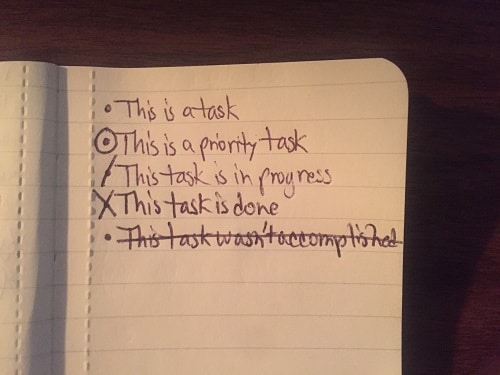 Productivity-wise, I use pen and paper to list my to-dos for the day, using a bullet journal format (with each separate bullet point counting as a task; priority tasks designated with a circled bullet point; in-progress tasks with the bullet point half-crossed off; completed tasks with the bullet point fully crossed-off; and tasks I couldn’t get to marked with a line crossing it out fully). I also am a firm practitioner of the Pomodoro Technique, so I use a minimal Pomodoro counter called Be Focused (available for MacOS and iOS).
What do you do or go to get inspired?
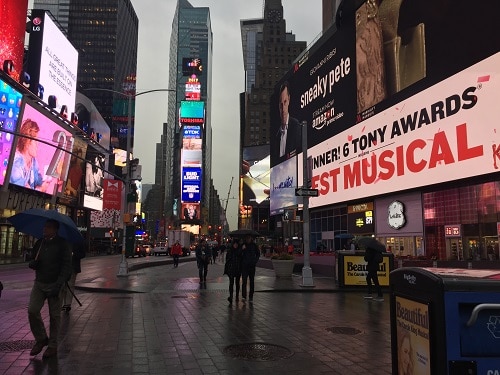 I live in New York, so there are definitely times when I feel very beaten by the city and everyone in it. When I need to get re-inspired, I’ll usually either walk around the Times Square area or sit along the DUMBO waterfront and just take it all in. Just like many other New Yorkers, I usually try to avoid these areas because of their propensity to attract massive tourist crowds; however, when I’m too consumed by my own thoughts, I like being thrown into these large crowd of strangers, drown out the self-criticisms floating around in my head, and simply appreciate being in New York.
What’s your favorite piece of writing or quote?
I used to read and study a lot of rhetoric, and I’m a big fan of something President Teddy Roosevelt said in his “American Ideals in Education” address: “Nothing in this world is worth having or worth doing unless it means effort, pain, difficulty. No kind of life is worth leading if it is always an easy life. I know that your life is hard; I know that your work is hard; and hardest of all for those of you who have the highest trained consciences, and who therefore feel always how much you ought to do. I know your work is hard, and that is why I congratulate you with all my heart. I have never in my life envied a human being who led an easy life; I have envied a great many people who led difficult lives and led them well.” One of my all-time favorite books is The Power of Myth by Joseph Campbell. I read a lot of mythology growing up, and Campbell does a great job of modernizing mythology and framing it within the context of our own lives. Essentially, he puts forth this idea that the modern world can learn a lot by reading ancient mythologies, and by applying the lessons taught to more primitive people, we may actually begin to understand ourselves better as human beings. The book is actually a transcript of a series of video interviews he did with Bill Moyers back in the late-80s (which you can find on the Internet if you Google for it).What is the passionate problem you are tackling at the moment?
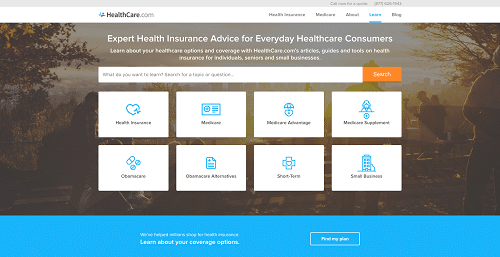 How can I get people engaged with online content around healthcare? Right now, my team at HealthCare.com is focused on publishing resources to help people learn everything they can about health insurance, healthcare policy, and anything else related to their healthcare. While there’s a lot of talks this year around health care (and Obamacare in particular), the topic is still fairly dry and it’s difficult trying to build a sustainable audience around it. We very recently launched HealthCare.com/info which will serve as a content hub for consumer healthcare topics (we’ve built out a Q&A section where people can submit any questions they may have about healthcare).