You’ve poured your heart into writing a book, not just to see it gather dust in the shadows of a crowded market. You are here to connect with readers, make profits, and leave a mark.
Self-publishing is the key to making that happen, but with the number of self-published books increasing by 264% in the last five years (and only 300 million books sold annually), the competition is fierce.
How do you ensure your story doesn’t get lost? It starts with choosing a self-publishing platform you can trust.
The right platform doesn’t just print your book. It empowers you with high-quality printing, marketing solutions, wide distribution services, and fair pricing so your work shines in the whopping $151.9 billion book industry.
The wrong one? It can bury you under fees, restrictions, and limited reach.
Your books deserve better than that. So, how do you choose a partner that has got your back? In this guide, we will walk you through what to look for and share the top self-publishing companies to bring your book to life with confidence.
Let’s dive in!
What to Look for in a Self-Publishing Platform for Books
As an aspiring author, self-publishing gives you the freedom to share your story on your terms, unlike traditional publishing, where gatekeepers often call the shots. But with countless self-publishing companies out there, how do you make the right choice for print books or ebook publishing?
We have narrowed it down to the must-have features for a flawless self-publishing process. Here’s what you should look for in a self-publishing platform or company:
1. Ease of Use (User Interface and Experience)
The best self-publishing companies or platforms make publishing effortless, not a tech nightmare. Here’s what to look for:
- Intuitive drag-and-drop interface for uploading manuscript, choosing print formats, and publishing without tech skills
- Streamlined navigation for setting up and managing book details such as cover design, book title, description, and category
- Ease of editing and updating book content without having to re-upload it from scratch
- Quality support, including help center, tutorials, FAQs, chat support, and author communities for quick fixes
- Simple and clear steps for a seamless self-publishing process
2. Distribution Reach
The top self-publishing companies maximize your book’s visibility by connecting it to the right readers, everywhere. Here’s what to prioritize:
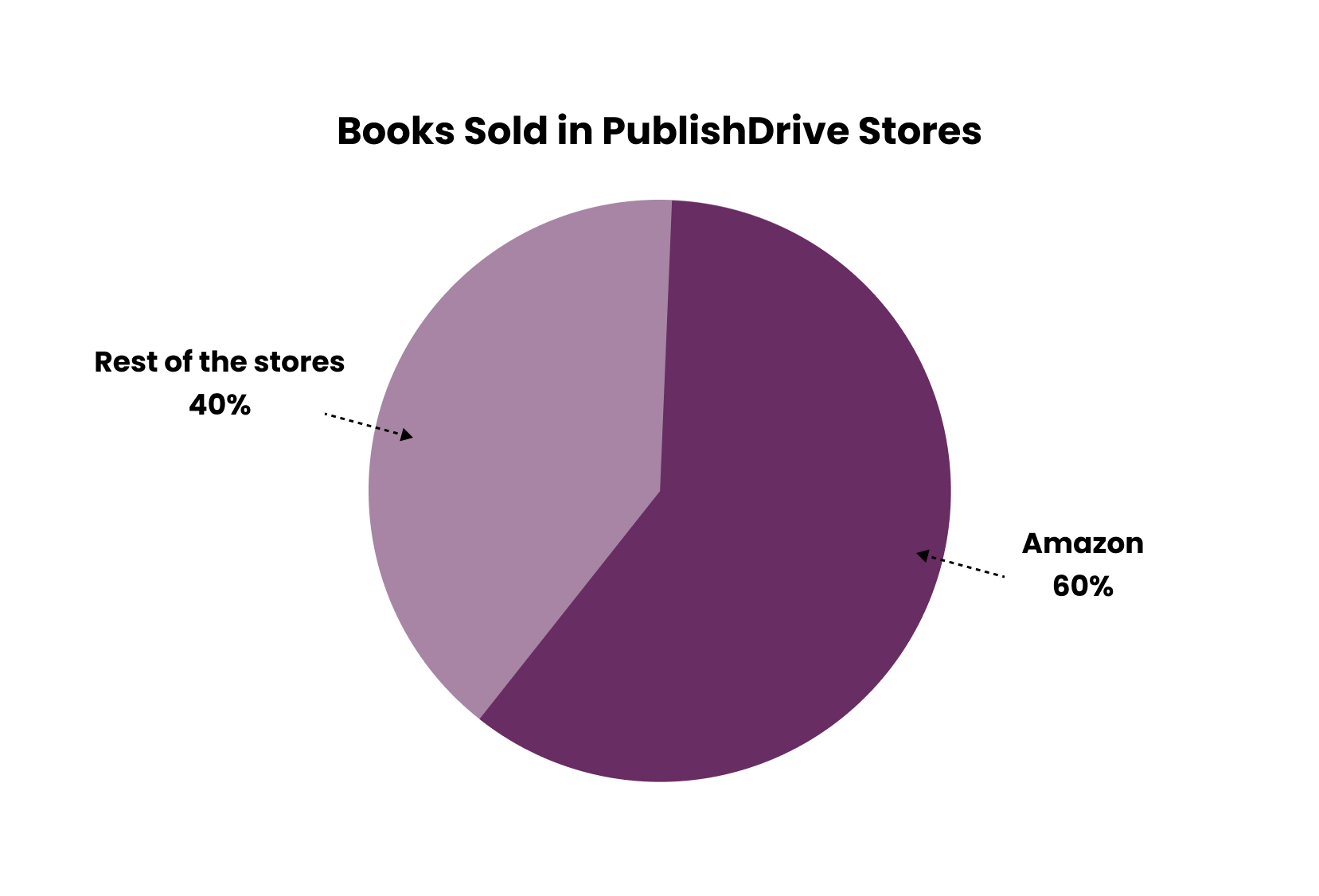
The platform should have a diverse distribution network with all the major retailers such as Amazon, Barnes & Noble Press, Apple Books, and Kobo Plus. If you restrict your print or ebook sales to Amazon (the world’s largest retailer), you are missing out on about 40% of potential royalties (as 40% of total book sales occur outside of Amazon).
Source
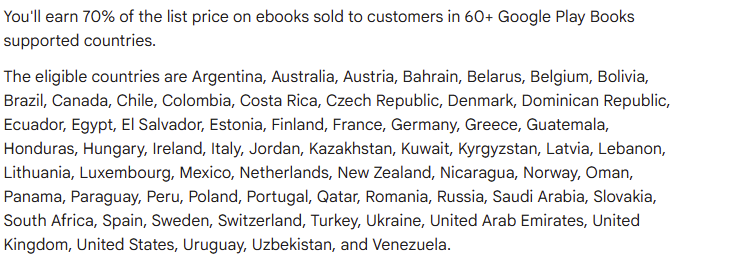
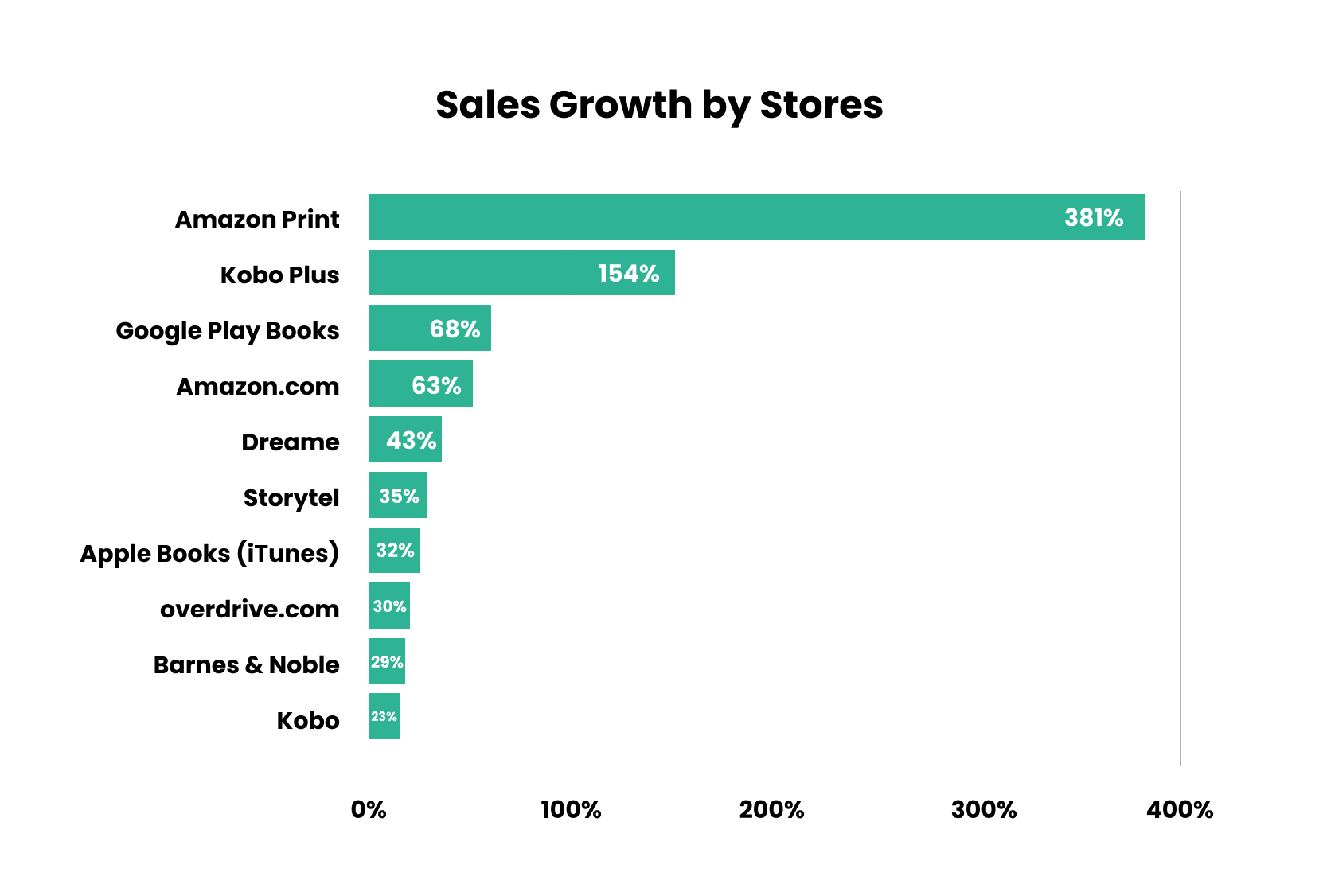
While Amazon leads the way, channels like Kobo Plus and Google Play Books have also seen an increase in their book sales volume, year over year.
Source
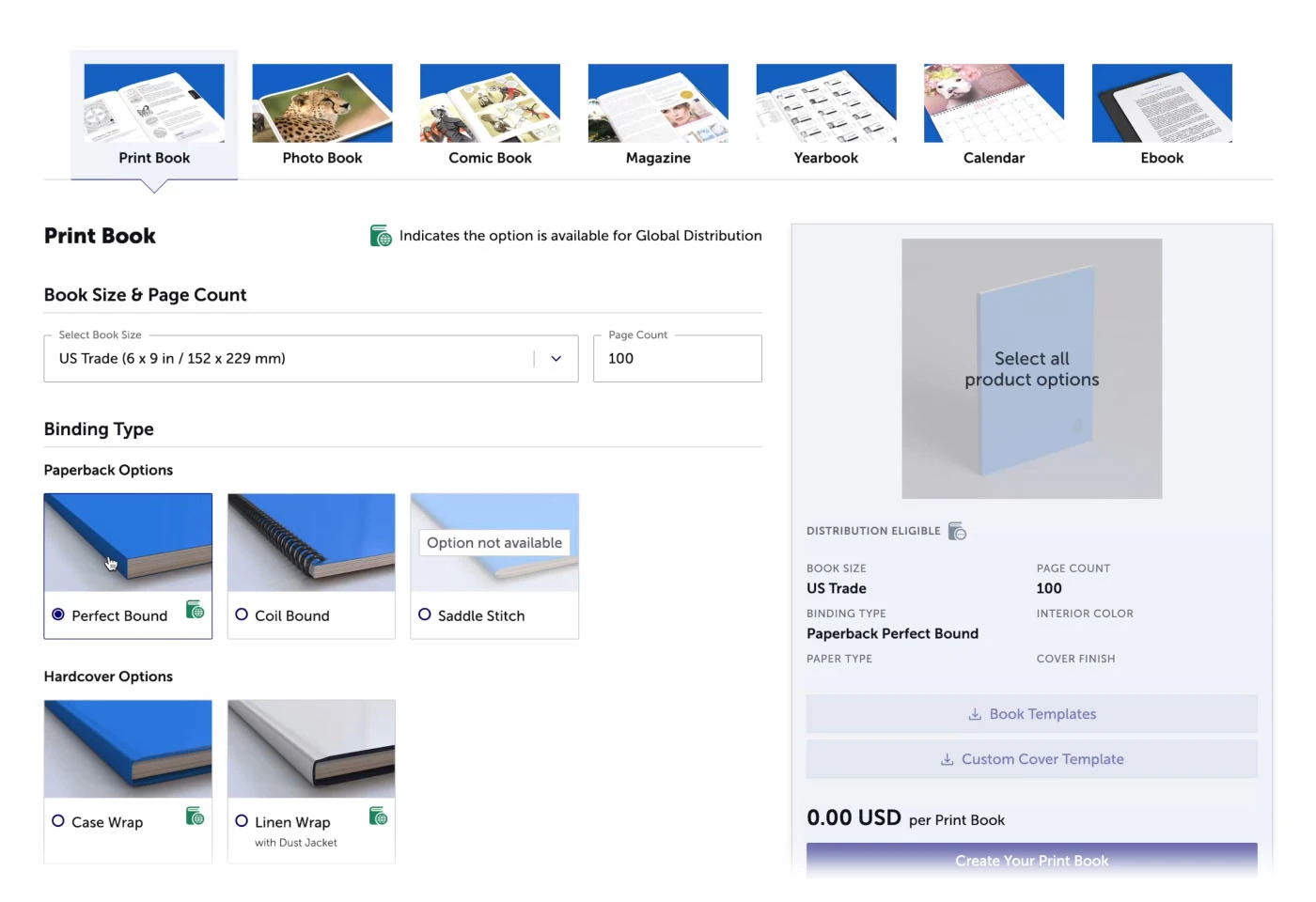
Other than distribution channels, you should also look for the print formats the platform supports to accommodate different readers’ preferences. Some popular ones include paperback, hardcover, audiobook, and ebook publishing.
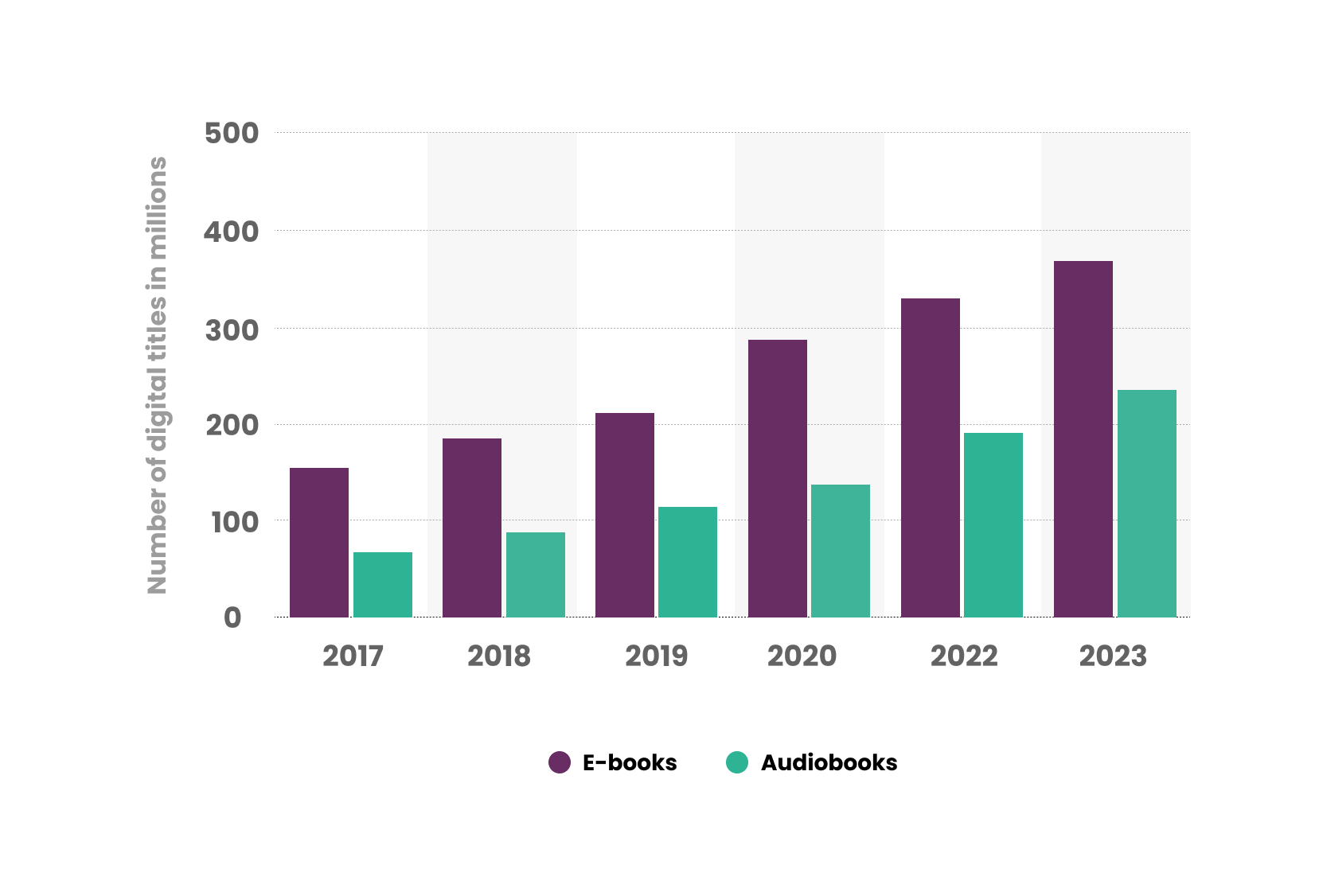
It is a plus if the self-publishing platform integrates with audiobook platforms such as Audible and iTunes to help you capitalize on the growing audiobook market, which is expected to reach USD 9.84 billion in 2025. This rapid growth is driven by consumer demand for convenient storytelling.
What’s more? Certain self-publishing companies offer extended reach to libraries and schools, which hit a record high of 605 million digital book borrows in 2023. Extending distribution to these channels can help independent authors like you widen readership.
Source
3. Royalties and Payment Structure
The best self-publishing companies offer higher royalty rates (35%-70%) than traditional publishing (10%-15%) because self-published authors get a larger portion of the sales revenue.
However, your book’s earnings shouldn’t be a mystery. Ensure the company you choose pays you fairly and fast.
The percentage of royalties offered per book sale also differs based on book formats, pricing, distribution channels, and exclusive agreements.
Also, factor in the payment frequency of your royalties to manage your income streams effectively. Does the platform pay you monthly or quarterly?
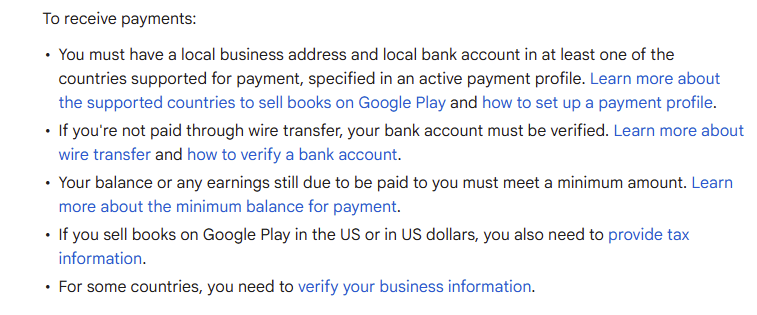
Examine the minimum payout thresholds and methods since they vary based on each platform’s policy. For example, Amazon KDP requires a minimum of $100 for wire transfers and checks.
Look for any fees or charges for publishing, distribution, or marketing services. Though many platforms have no upfront fees, there could be potential costs for optional author services like marketing or print-on-demand.
4. Pricing Flexibility
The pricing flexibility self-publishing companies offer directly affects your profitability and market reach. Ask yourself if the platform you are choosing gives you:
- The freedom to set and adjust book prices: You should be able to strategize your book pricing based on your goals and market demand. For example, Amazon KDP lets you set minimum and maximum price lists for ebooks, paperbacks, and hardcovers.
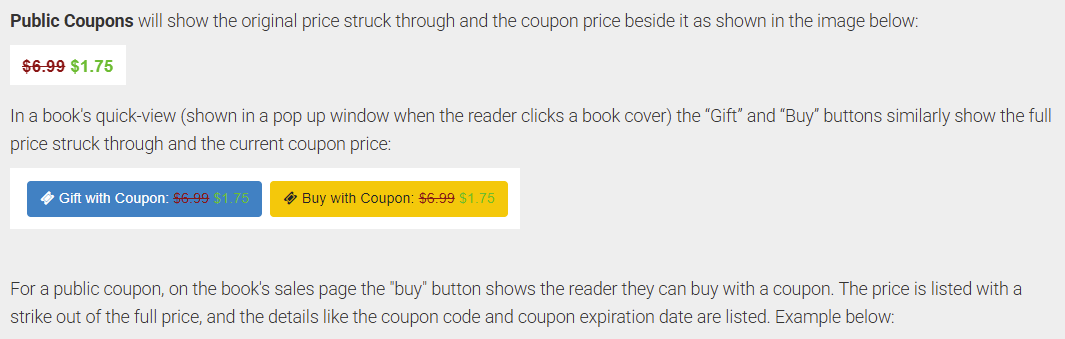
- Dynamic pricing options: Does the platform let you run price promotions or offer temporary discounts to entice new readers and increase your book sales?
- Control over ebook and print pricing in different regions to optimize your regional sales
5. Marketing and Promotional Tools
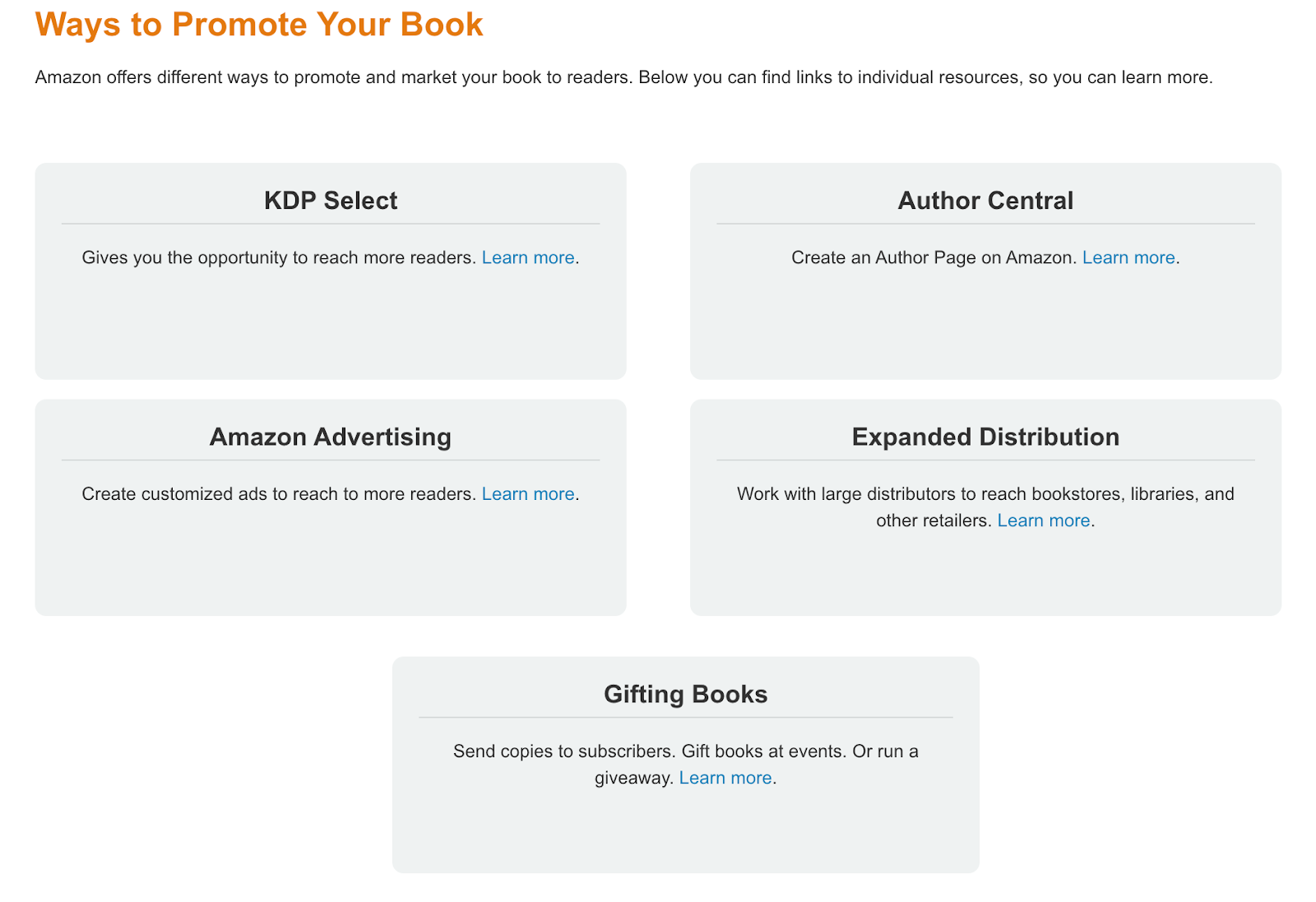
The best self-publishing companies give access to marketing tools such as email newsletters, paid ads, and featured listings to help your books reach the right hands.
Even better if the platform provides a centralized hub, such as a custom author website or a landing page to run promotions. You can use it to offer important information about you and your self-published book to potential readers.
Check if the platform has partnerships with external marketing platforms such as BookBub or Goodreads. It could let independent authors like you tap into new, avid readers.
What’s more? Some self-publishing companies let you create and manage discounts, giveaways, and promotions to boost your sales.
6. Print-on-Demand (POD) Options
When appraising POD options, examine if your potential self-publishing arm:
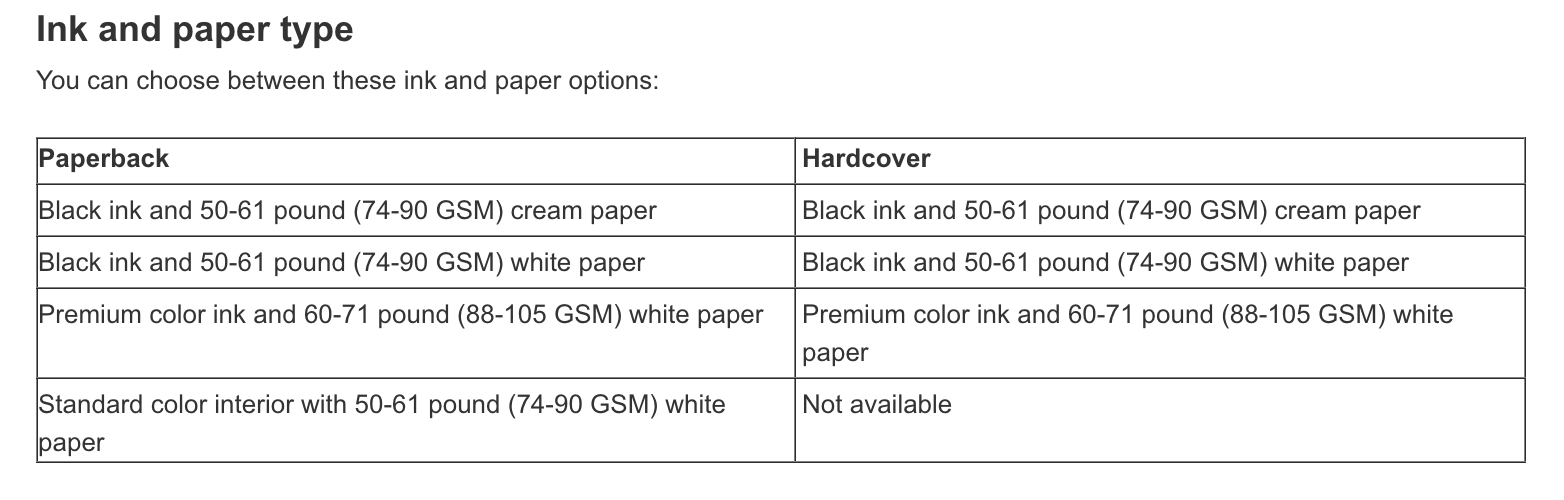
- Provides print-on-demand services for physical copies. Does it also offer cusomization options for printing including cover finishes and paper types?
- Has a good book publishing reputation in terms of the quality of their printed books (paper quality, binding, etc.). For example, reputable companies like Books on Demand (BoD – a European pioneer) are known for their high-quality production standards.
- Offers global delivery options with reasonable shipping costs to boost your book’s reach
- Has a transparent return policy for printed books, which contributes to the reader’s positive purchasing experience
7. Formatting and Design Tools
Your book needs to look as good as it reads to appeal to potential readers. Pick a self-publishing platform that nails the design game with these essentials:
- Built-in formatting tools for ebooks and print, ensuring consistent, pro-level layouts
- Ready-to-use templates for covers and interiors to polish your book faster
- Flexibility to upload custom-designed covers and layouts that sync with your unique style or brand
- Support for key file formats (EPUB, PDF, MOBI) to publish seamlessly across platforms
- Preview tools to see exactly how your book looks on different devices and in print before it goes live
8. Customer Support
When an unexpected obstacle occur in publishing, you need publishing companies that don’t leave you hanging. Here’s what a top self-publishing platform should deliver:
- 24/7 support with fast live chat and email responses to tackle issues on the spot
- Quality support for resolving issues like publishing glitches or account problems
- Self-service portal to locate quick, do-it-yourself solutions on your own
- Active author forums or communities for quick tips, troubleshooting, and connecting with other self-published authors
9. Analytics and Reporting Tools
Knowledge is power; especially when it comes to your book’s success. The best self-publishing companies arm you with these essential analytics:
- Real-time sales tracking and analytics dashboard to monitor performance and reader behavior (like time on pages or book completion rates)
- Reader insights including their demographics, geographical data, and preferences
- Detailed reporting on royalties and payments to manage your earnings effectively
- Performance tracking of your book marketing campaigns and promotions to identify what’s driving sales and what’s falling flat
10. Copyright and Intellectual Property Control
Your book is your creation. Don’t let a platform take major advantage over your revenue potential. The points below are crucial when evaluating potential self-publishing companies:
- Retention of full copyright and intellectual property as the author
- Clear terms about book ownership and licensing
- Licensing options for book translations, adaptations, or audiobooks
- Ability to withdraw or control rights to your self-published books
11. Cost and Fee Structure
While some platforms charge upfront fees for book setup and distribution services, others charge you on commission basis. Some also charge setup fees and conversion fees separately.
The bottom line is to understand each platform’s fee model, including charges for optional services like cover design, professional editing, international distribution, or marketing services.
Check for hidden costs such as per-book distribution fees, listing fees, and platform commission cuts per sale, which may significantly impact your profits.
12. Reviews and Reputation
Platform reputation in the self-publishing industry is important. The platform you choose should have a solid track record, positive author reviews, and a history of successful book launches.
Check for platform reviews and testimonials from other self-published authors on forums like Goodreads, Reddit, or KBoards. These, along side well-known authors who made it big through the platform can vouch for its effectiveness in supporting your self-publishing journey.
13. Self-Promotion and Networking Opportunities
Publishing is just the start. Top self-publishing companies or platforms help you connect with peers and potential readers. Look for platforms that offer access to:
- Built-in promo tools such as author pages, blogs, and easy participation in author events or interviews
- Networking hubs like online communities, forums, or social media groups, to connect with fellow writers for collaboration or support
- Community-driven initiatives or collaborations for book launch events or cross-promotions to amplify reach
14. Platform Stability and Longevity
Your book deserves a platform that is built to last, not one that might vanish mid-journey. Assess the platform has financial strength and a proven, sustainable business model for long-term reliability.
A strong track record of helping authors and positive reviews reflect consistent service quality. It is also important to find out if there have been any major issues or service disruptions in the past that could derail your book publishing process or delay royalty payouts.
The Best Self-Publishing Companies for Books
We have been in your shoes; trying to help independent authors and publishers make a mark in the industry. So, which platform won’t let you down?
After digging deep and testing the waters ourselves, we have rated the major self-publishing companies based on what truly matters: ease of use, distribution network, royalty payouts, analytics, promo tools, and more.
These aren’t just boring details; they impact your book publishing process and sales revenue. Below, you’ll find our no-nonsense reviews of the 7 self-publishing companies that stood out, packed with insights you won’t get from a generic rundown.
Before that, here is how we rated each platform for different parameters out of 5:
| Platform |
Ease of Use |
Distribution Reach |
Royalties & Payment Structure |
Pricing Flexibility |
Marketing & Promotional Tools |
Print-on-Demand Options |
Formatting & Design Tools |
Customer Support |
Analytics & Reporting Tools |
Copyright & IP Control |
Cost & Fee Structure |
Reviews & Reputation |
Self-Promotion & Networking |
Platform Stability & Longevity |
Score |
| Draft2Digital |
4 |
5 |
4 |
4 |
4 |
3 |
4 |
4 |
4 |
5 |
4 |
5 |
4 |
5 |
4.3 |
| Amazon KDP |
4 |
5 |
4 |
4 |
3 |
4 |
3 |
3 |
3 |
5 |
5 |
5 |
3 |
5 |
4.1 |
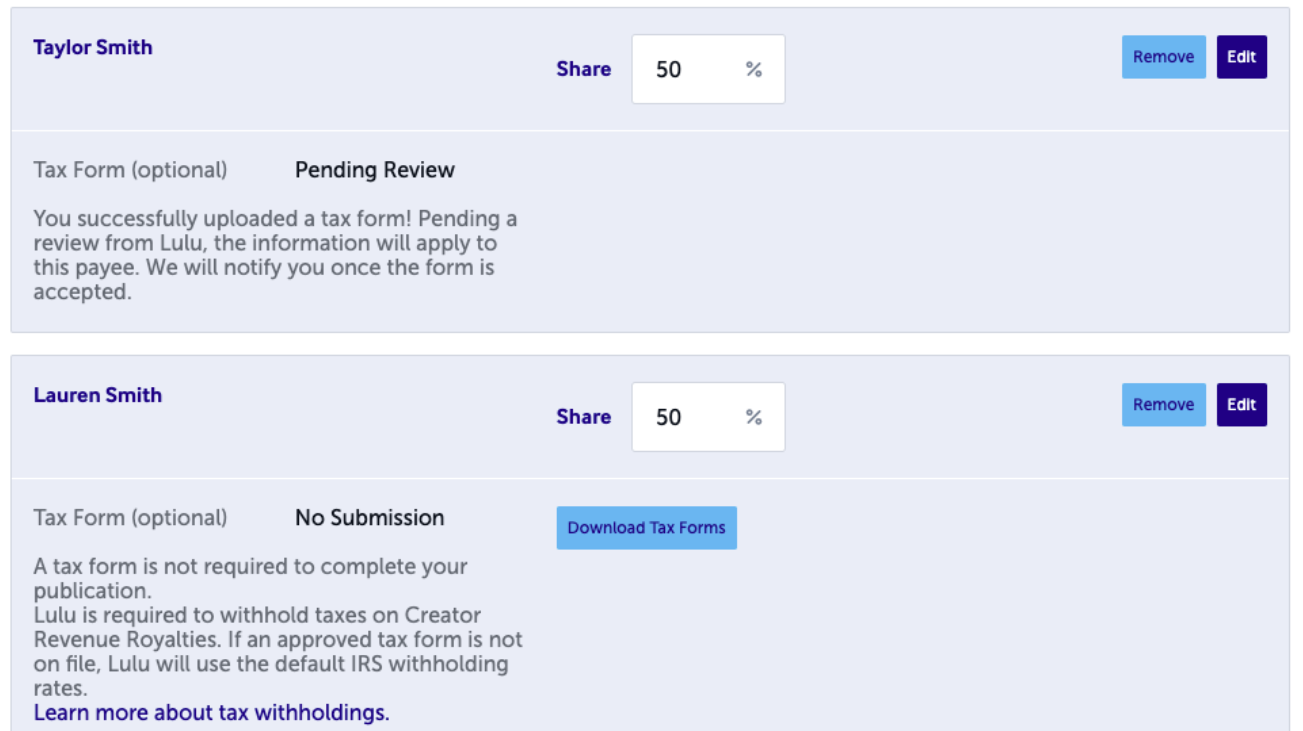
| Lulu |
4 |
4 |
3 |
4 |
3 |
5 |
4 |
3 |
3 |
5 |
4 |
4 |
3 |
4 |
3.8 |
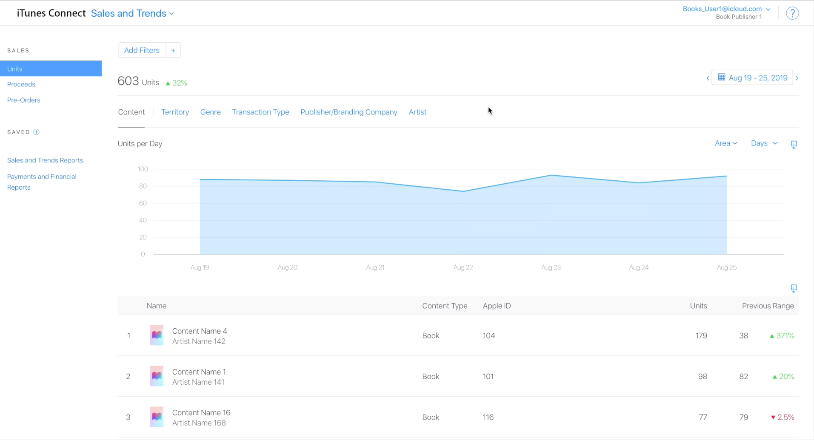
| Apple Books |
3 |
4 |
3 |
3 |
3 |
2 |
3 |
3 |
3 |
5 |
4 |
4 |
3 |
4 |
3.4 |
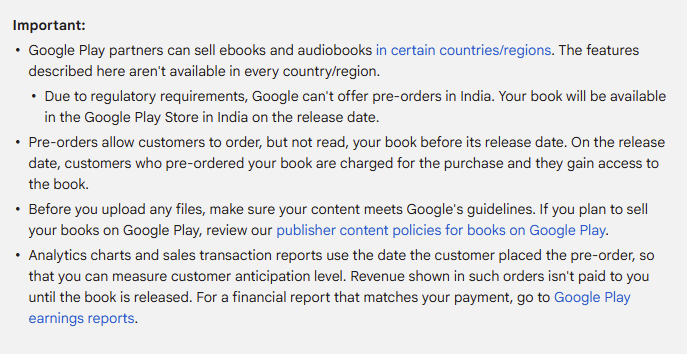
| Google Play Books |
3 |
4 |
3 |
3 |
3 |
2 |
3 |
3 |
3 |
5 |
4 |
4 |
3 |
4 |
3.4 |
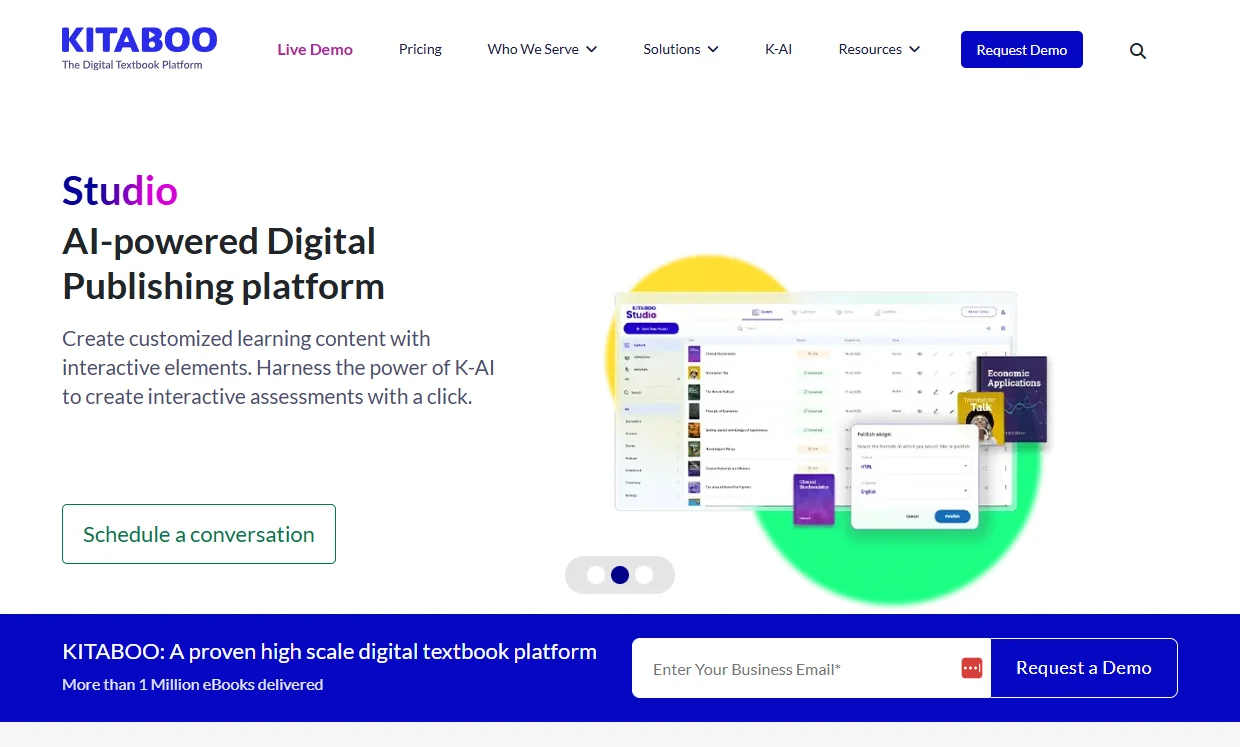
| KITABOO |
3 |
3 |
3 |
3 |
3 |
2 |
4 |
4 |
4 |
4 |
4 |
3 |
3 |
4 |
3.3 |
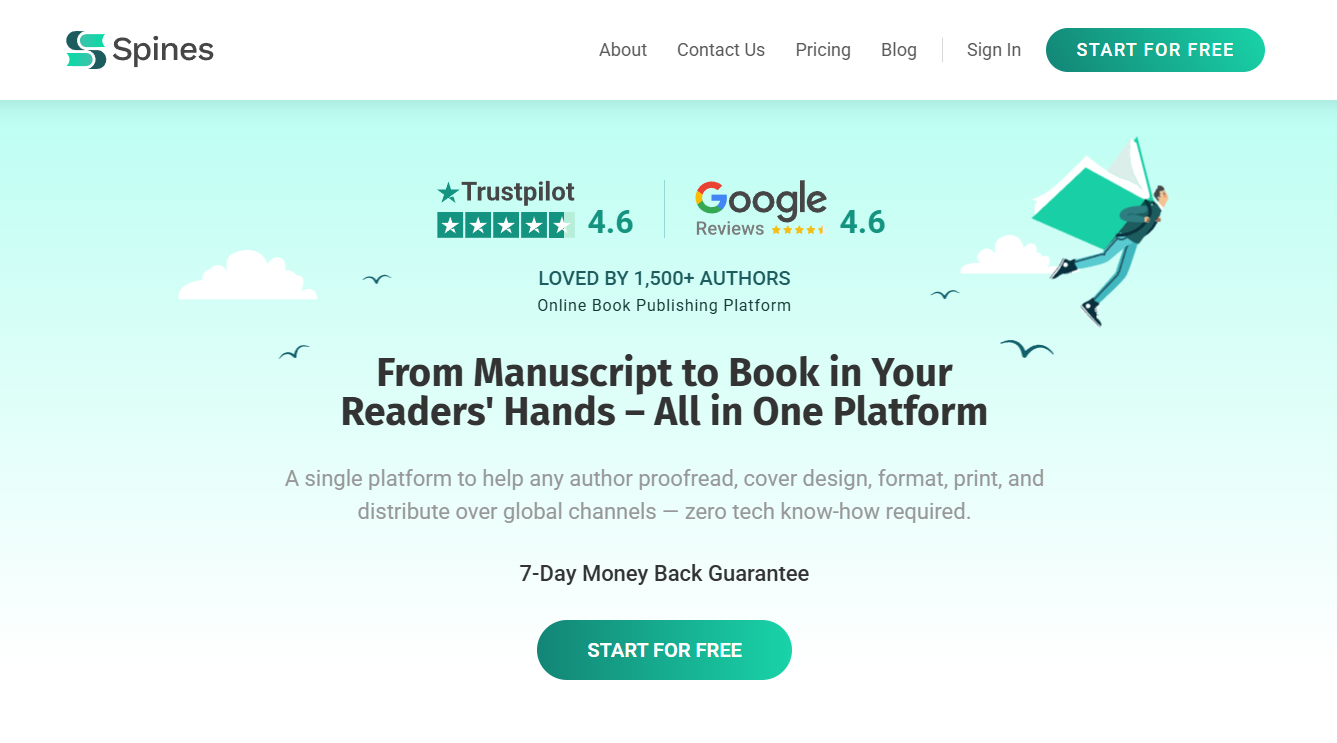
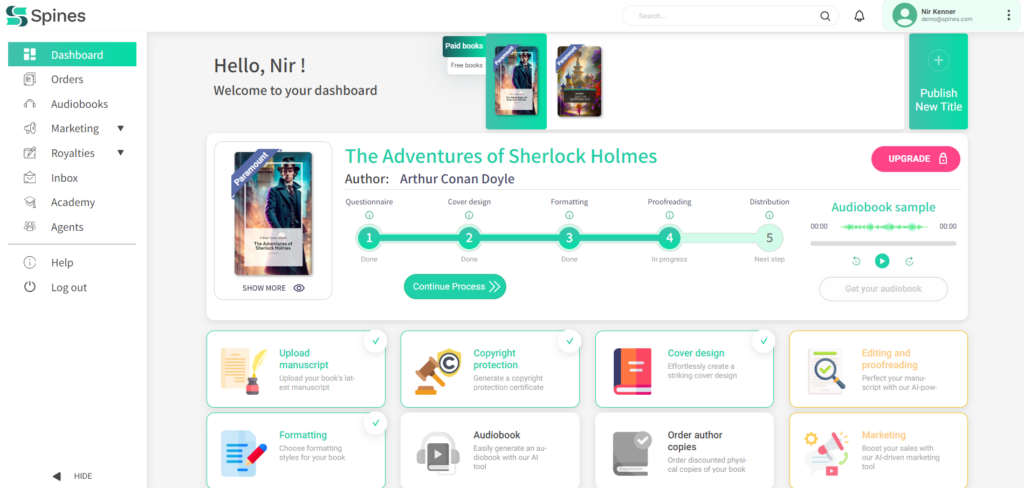
| Spines |
3 |
2 |
2 |
3 |
2 |
2 |
3 |
3 |
2 |
4 |
3 |
2 |
2 |
3 |
2.6 |
Let’s learn more about each of these self-publishing companies in detail to ensure you make an informed choice.
FAQs
What is the average cost to self-publish a book?
The cost largely depends on editing, cover design, marketing services, genre, and quality. On average, it ranges between $100 and $5,000.
What is the best publisher for first-time authors?
Amazon Kindle Direct Publishing (KDP) is a better publisher for first-time authors. It is easy to use, has a global reach, and has no upfront cost. Other beginner-friendly options are Draft2Digital and Lulu.
What is the highest-rated self-publishing company?
Based on our evaluation of the best book self-publishing companies, Draft2Digital tops the ratings chart with 4.3 stars. Thanks to its wide distribution network, copyright control, reputation, and platform stability and longevity.
Amazon KDP is the most popular due to its market dominance and royalty structure, while Lulu is preferred for print books.
Even so, the best self-publishing companies vary based on an author’s specific needs.