



Publishers today are not chasing raw traffic that might not translate to meaningful revenue, but are looking for sustainable monetisation strategies.
In 2026, programmatic advertising is estimated to account for 90% of global digital ad spend, which is projected to cross almost $1 trillion for the first time. Despite global digital ad spend increasing dramatically and advanced formats emerging, publishers across the globe are still struggling with deriving revenue per visitor. Though publishers have significant scaling opportunities, they still compete for considerably narrow margins because most of the ad budget goes to leading platforms such as Google Ad Manager and Google AdSense.
There are various other factors that are coming in the way of effective monetization. CPMs from Tier-2 regions such as Brazil, Mexico, India, and Indonesia are significantly compared to Tier-1 countries, making it challenging for publishers to strengthen consistent revenue streams. Besides, 1.77 billion internet users are using ad-blockers, further limiting monetization opportunities.
Considering all these factors, publishers are looking for better ad alternatives which would focus on performance-focused and conversion-driven formats, helping publishers scale global traffic and revenue consistently. This is where Kadam Advertising Network comes into play and addresses all these gaps effectively. Designed to strike the perfect balance between performance and scale, Kadam Advertising supports powerful ad formats and accelerates the revenue opportunities for both publishers and advertisers, even from emerging markets.
What is Kadam Advertising Network

Kadam is a performance-first global network that enables large-scale monetization of website traffic by providing access to more than 11 billion daily impressions across the network. From connecting publishers to a diverse pool of advertisers bidding for traffic, to offering 10% profit margin, impressive CPM rates,100% fill rates, premium traffic quality, supporting a large variety of ad formats, along with an anti-fraud detection system, a weekly payout system, to real-time performance tracking, Kadam Advertising Network has features that strongly align with the interests of publishers.
Breaking the binary of traditional programmatic ad platforms that focus on seasonal brand campaigns, Kadam Advertising essentially operates on a performance-centric ecosystem that helps publishers monetize clicks and conversions. This boosts the consistent revenue potential of publishers and ensures high filler rates even in low-value GEOs. This volume-focused ad network is the most effective in sectors such as e-commerce, finance, iGaming, dating, and Nutra.
In this detailed analysis, we will shed light on the features of this ad network and find out whether it ensures long-term scalability and consistent returns to publishers.
Features of Kadam Ad Network
1. High-Volume Network
Kadam Ad network connects publishers with a diverse pool of advertisers across the world, which helps them monetize their traffic in a stable way across GEOs. These advertisers primarily operate in the performance-focused sectors like e-commerce, iGaming, and finance, where the budgets for audience acquisition are high. Since the demand is also high, publishers don’t miss out on the revenue potential. This ensures high fill rates and makes sure most of their ad inventory is sold even during low-demand periods. The competition for traffic remains high in all the locations, even in Tier-2 and Tier-3 countries such as India, Bangladesh, Indonesia, Brazil, and Egypt and helps publishers with global scalability across 195 countries and consistent revenue.
2. Supports more than 5 Ad Formats

Not just one ad format, Kadam opens avenues for diverse monetization opportunities for publishers. The list includes banner ads, native ads, popunder ads, push ads, and display ads. For publishers, this is really significant. Based on the behaviour of various audiences, publishers place the ads accordingly instead of relying on one format and boost fill rates per user. Out of all the formats, popunder and push notifications drive the highest and most consistent revenue for publishers, as the advertiser demand is highest in these sectors.
3. Strong CPM rates
Through Kadam Advertising Network, many advertisers compete to target the same kind of audience or location. The higher the bid for the publisher inventory, the higher the importance or value of the ad space. The revenue potential for publishers for every 1,000 impressions also becomes significantly stronger. Due to strong advertiser interest in high-performing segments, the CPM rates drive upwards, boosting the revenue potential for publishers. Though it depends on specific publisher circumstances, the CPM rates offered generally range from 1$ to 8$
4. Real-time Performance Tracking and Optimization
Kadam allows publishers to keep a tab on the best-performing segments that are generating the strongest yield and make data-backed decisions. From location, device, impressions, clicks, to placement of ads, publishers can track every metric, gain granular-level insights to improve performance, eliminate weak traffic sources, filter unwanted ads, and optimize every aspect to boost their revenue effectively.
5. Anti-fraud protection Technology
Be it small or mid-sized publishers, brand safety is of paramount importance. Inappropriate or offensive content not only damages the brand’s reputation but also makes publishers lose out on meaningful revenue opportunities. Kadam Advertising Network stands out with its multi-layered anti-fraud protection that ensures the traffic quality does not come in the way of performance. Through features such as real-time traffic filtering, behavioral analysis system, and smart fraud detection technology, publishers maintain compliance standards, protect their revenue and maintain long-term trust with advertisers.
Account Setup and Onboarding
1. Setting up a publisher account

- The onboarding process of Kadam Advertising Network is designed to be easy and hassle-free for publishers.
- The first step starts with navigating your way to the Kadam homepage. You will find the sign-up option. Click on it.
- Give necessary details such as your email and password.
- You will receive a verification link in your email.
- Confirm it to verify your account.
2. Adding your website and traffic sources for compliance checks
- The Kadam team reviews the quality of your website and traffic through the anti-fraud technology thoroughly before the monetization process starts.
- Go to the dashboard and click on ‘Add Source’.
- Apart from the website, you have to mention whether your traffic sources are mostly from mobile phones or laptops.
- The traffic quality and the content of the website will be assessed and validated by the team. The platform will also make sure that the website adheres to the policies.
- Once the approval process is completed, you can log in to the dashboard and start monetizing your website.
3. Adding Guest Analytics

- This is an important step for traffic verification of the approval process.
- To offer access, simply go to the settings option and click on ‘Access tab’.
- Switch on the ‘Public Access to Statistics’ option and click on the ‘save option’.
- While adding the site, make sure you copy the statistics link.
- In case you don’t want to open access, you have the provision of giving temporary open access.
- Click on the ‘access tab’ on settings.
- There is an option called ‘individual access’. Select that option and click on ‘Add User’.
- The next step involves filling the login field carefully and clicking on the ‘Add option’.
- However, the method of adding access to Google Analytics is a little different.
- Go to the analytics website and log in to your account.
- Select the ‘Account Access Management’ from the Admin tab.
- You can easily add users by clicking on the Account Access Management from the admin panel.
- Simply click on the + button and click on Add users.
- Fill the email addresses field and check the box beside ‘Notify new users by email’.
- Go to Direct roles and data restrictions and click on select on ’viewer’.
- Then, go to the left panel and go to Reports and Report Snapshot.
- Click on the Share link.
- Next, click the link and paste it directly to the site interface.
- Make sure all the steps are followed carefully to speed up the approval process.
4. Setting up Kadam Dashboard
- Publishers can navigate through the dashboard easily after the approval process.
- From clicks, impressions, to placement of ads or earnings, publishers can keep track of everything they need through the dashboard.
- The real-time statistics from the Statistics/Reports section will help publishers keep an eye on the performance and optimize effectively to maximise revenue margins.
- They can also generate ad codes and manage campaigns from the dashboard.
5. Setting up ad units
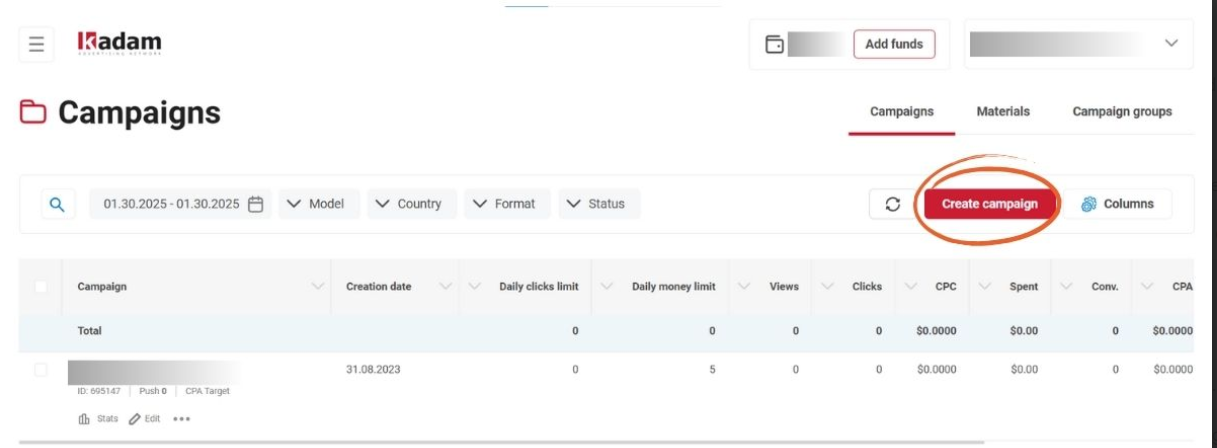
- For publishers, choosing the right ad unit is important to make the most of the campaign.
- Go to the publisher account and click on ‘Create campaigns’.
- Create a name for the campaign that seems relevant.
- Choose your preferred ad format from the options according to the traffic behaviour, location, and device type.
- You can also control the user experience and determine how often users will see the ads.
- Publishers can run multiple campaigns depending on the audience and the traffic type, while analyzing which segments or formats perform the best.
6. Creating and integrating ad codes for the website
- After setting up ad units, it’s time to generate ad codes.
- Click on ‘Get Code’ on the campaign.
- For websites, opt for ‘script code’ and for alternative flows, choose ‘direct link’.
- Keeping the visibility and user experience in mind, paste the code on the footer, header or top-performing pages.
7. Website Monetization
- After the ad code is successfully created and pasted on the website, the revenue stream gets activated on a real-time basis.
- The ads are also displayed to users on the basis of your choice of placement.
- Publisher revenue is derived from specific actions such as impressions and clicks. Some of the other factors include ad formats, location, placement, and more.
8. Tracking and optimizing performance

- To maintain the quality of inventory and maximize revenue potential, it is important for publishers to track CPM and CPCs, make prompt decisions and optimize effectively.
- Go to the ‘statistics’ section on the dashboard and track real-time data on metrics such as clicks, impressions and revenue.
- Use filters such as placements, location, device, or campaign types and analyze high and low-performing segments affecting the revenue.
- If you want to optimize, go to the campaign section of the dashboard. From testing various formats and ad placements, to scaling winning segments and freezing the low-performing ones, publishers can optimize effectively. You can also make changes to the frequency caps from here.
- In case you are running multiple campaigns, you can compare the performances simultaneously and optimize to ensure long-term monetization opportunities.
9. Claiming payouts
- Once you have reached the payout threshold, you can draw your earnings.
- Simply click on the “Billing / Payments” section
- There are various payment methods available, including Crypto, PayPal, wire, Bank Transfer, Capitalist, USDT and more.
- Choose the one based on your preference and request a payout.
Getting started with the Kadam Advertising Network Dashboard
When it comes to inventory, traffic performance, or revenue, publishers don’t have to count on guesswork. The real-time dashboard of the Kadam Advertising network makes it easy for publishers to manage ad placements, monitor traffic performance, and gain clarity on the important metrics affecting revenue.
Beyond statistics, the dashboard is designed to drive action and help publishers gain insights on every factor, such as impressions, clicks, placement of ads, and optimize effectively. From adding sites, setting up ad blocks, identifying high and low traffic and ad placements, activating monetization tools, or requesting payouts, publishers can do everything through this user-friendly dashboard without technical support.
1. Sites

For publishers, this is an important section to start the process of monetization of the website. From here, you can submit the sites from the ‘Add site’ button in the upper right corner of the page and get the approval from the network. To get the approval, there are general requirements that have to be kept in mind.
For example, prohibited content related to drugs, weapons, or prostitution, readymade homework resources for students, Wrapping services, unfinished projects, and empty pages are not allowed. Insufficient traffic, such as less than 500 unique users in the last two weeks, can also be another reason for getting disqualified. Besides, Iframe traffic, Bots or iframe traffic can also be strictly blacklisted.
To complete the approval process, it is important to provide guest access to analytics to make sure that the traffic meets the guidelines and help the platform form a strong understanding of the audience demographics for effective bids and ad targeting
2. Adding and managing ad blocks
From the dashboard, publishers can also decide where the ads will be placed on the site. Be it display, ad, Clickunder, or native ads, each form has a unique code. When it comes to the Kadam Advertising network, display ads are the most popular for the maximum outcome of the publishers. To create blocks for Display ads, publishers have to navigate to the block management section, add the name of the site, and click on the Add block button. Click on the Display Ads block format after filling in the name.
Select your desired size of graphic banner and set up your own native templates. Even without any in-depth knowledge of HTML, you can create your design according to your vision and site requirements through the native template designer. Just copy and paste the JavaScript of the block to your desired location on the site. Your ad block is set up easily in a few minutes if you follow this.
3. Real-time performance statistics
The real-time statistics help publishers form a well-rounded understanding of the ad performances, audience response, and revenue metrics. From impressions, clicks, eCPM/CPM, click-through rate, ad placements, or traffic quality, publishers get a total breakdown of performances and derive valuable insights on which ads are performing the best on their inventory.

You can also use various filters such as date, source, country, device, ad format and track your revenue based on the grouping. The placement-level reporting also helps publishers refine their approach and strengthen their revenue. Publishers can create personal reports, download them in Excel format and share the report with the manager without switching accounts. However, the dashboard does not have advanced visual analytics layers offering deep insights on the audience behaviour apart from basic GEO/device segmentation.
4. Finance and Billing
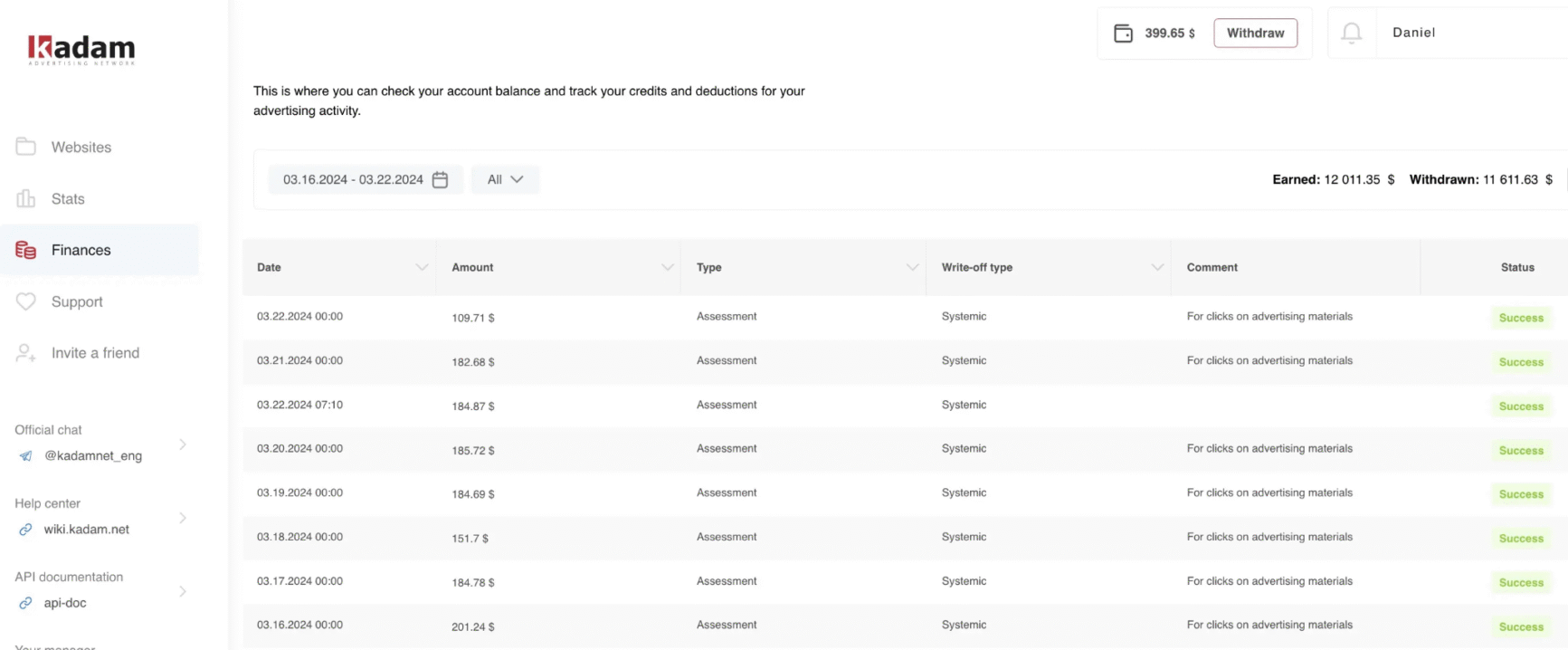
Publishers can easily check on the available balance section, credits and deductions from the ‘finance’ section of the dashboard. They can also withdraw earnings if they have reached the threshold. There are various payment thresholds for the various payment systems such as PayPal, Paxum, bank transfer, or USDT (crypto). They can withdraw your earnings from the dashboard by selecting your desired payment method. The revenue earnt by the publisher is generally completely based on the performance-based metrics such as advertiser demand, CPA, and CPM.
5. Support
While navigating the platform, publishers might have separate queries. The support section in the dashboard has been designed keeping this in mind. It features an in-depth knowledge base and a dedicated FAQ section to address the usual issues faced by users. They can refer to the section and explore all the features of the platform, while understanding how it fits specific requirements without leaving any scope for confusion.
6. API extension
Though API is not an integrated feature of the Kadam Advertising Network, publishers can use it if they want to manage the data programmatically and use it in their own dashboard or analytical tools. But the publishers have to secure access through the bearer token. This helps publishers manage multiple sites and handle high traffic conditions while scaling.
Customization Features
1. Ad formats

Kadam Advertising Network enables publishers to choose from a wide variety of ad formats according to the website, traffic type, user interface, and audience requirements. While banner ads offer the highest CTR, native ads ensure optimum user engagement as they fit seamlessly with the site content without disrupting the user experience.
On the other hand, Push Notification Ads are suitable for e-commerce, finance, news, and games. Popunder ads are the cheapest format which ensures traffic quality and global reach. Publishers can try out various ad formats and find out which is driving the maximum ROI.
2. Ad zones or Placements
Instead of following a one-size-fits-all setup, publishers can decide where they want the in-page or catfish ads to be placed on the website -footer or header. They can test various ad placements depending on the ad format and check which one is triggering actions- clicks or impressions, and maximizing revenue potential.
For example, the audience from Tier-2 countries might engage with parts of the website which might not be aligned with the audience from Tier-1 locations.
3. Banner sizes
In the case of banner advertising, publishers can choose the dimensions suitable for banner blocks. This flexibility ensures that the creatives fit seamlessly within the website layout without disrupting the user experience. This customization option helps them ensure that ad placements on mobile devices and desktops are aligned.
4. Behavorial settings for Popunder and clickunder ads
For publishers who want to focus on user experience while maintaining the perfect balance with monetization, this is important. There are various options such as back-button, on-click, or referrers related to blocking which help them determine how often ads will be displayed. Showing the same ad to the same user can cause ad fatigue.
Ads should be optimized in a way that they create a strong brand recall value and interest in the minds of the audience. Publishers can enable or disable repeat appearances, decide when the ads will be displayed after being hidden, and even determine how the ad will be activated- through on-click or back button.
5. Site Category
Before the monetization process starts, the Kadam platform first verifies the domain. During this process, publishers can add a specific category to the website based on the content type to align with the suitable advertiser demand. The categories could be adult content, general content, or other options.
6. Direct Link
Even if publishers do not have a website, they can still earn revenue from traffic. Unlike traditional placement of ad codes on the website, they can generate a link which can direct the traffic to the ads aligned with their interests. This broadens the monetization opportunities for the publishers.
7. Inventory Management
Inventory management becomes seamless through the Kadam dashboard, in case publishers have multiple sites to handle. Publishers can rename the blocks, disable the blocks that are not performing well and even archive blocks from a single dashboard. This makes management of multiple campaigns easy and hassle-free.
8. Custom optimization and reports
Through the dashboards, publishers can form a strong understanding of the active campaigns and track metrics such as clicks, impressions, ad requests, visibility, subscriptions, and more. However, they can create customer filter segments based on location, source, ad format, and time and create custom views for optimizing. While making custom reports, they can cut out the noise and organize the data according to the ad units, location, device, operating system, and ad unit.
However, publishers cannot organize traffic manually through filters such as GEO, device, browser, or ad formats on Kadam. Through the special SSP auction on every request, traffic is matched with advertiser demand. Thus, the publishers don’t have manual control over ad targeting or optimization- related decisions.
Pricing
Kadam Advertising Network is suitable for publishers with mid to high volume traffic. The zero-cost entry model enables publishers to sign up without any charges as long as the general requirements are met. Even niche publishers are eligible as they don’t have to pay monthly charges for subscription. There are no additional costs involved for adding sites or campaigns.
When it comes to earnings, there are no fixed rates. The revenue potential for publishers essentially depends on clicks, impressions and advertiser demand. Pop and Push formats are the most effective and lead to higher returns for publishers.
The ad network essentially operates on a NET-30 cycle and the payouts generally take place on Thursdays as long as the minimum payment threshold is maintained. However, the threshold model differs from one payment system to another.
For example, the threshold ranges from ~$10–$15 for PayPal and Paxum, while the amount can be higher for wire transfer and crypto-based platforms.($250). Publishers can choose a payment platform based on their operational capacity.
Support
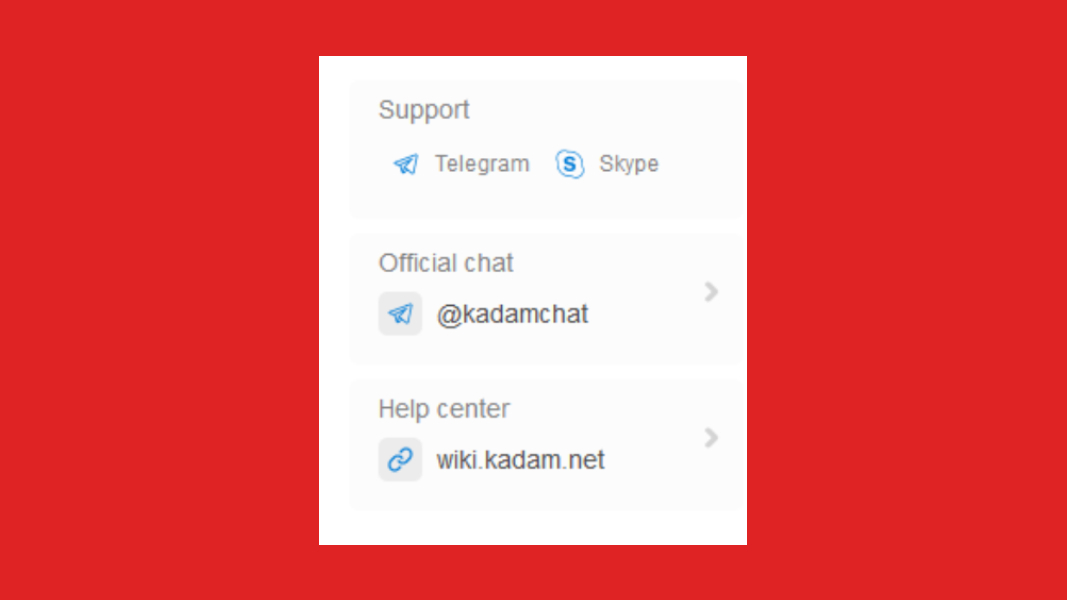
Kadam Advertising Network offers comprehensive support for new users. In case users face challenges, they can refer to the case studies, platform documentation, and FAQ section for self-learning. Though the 360 degree support is available for advertisers, publishers also get hands-on assistance from setting up the account, performance improvement, optimization and troubleshooting. Publishers can reach out to [email protected] for detailed queries. For prompt responses that demand immediate attention, live chat and Telegram options are also available.
Kadam Advertising Network Review
Here is what we loved about Kadam Advertising
- Not just premium GEOs, Kadam Advertising helps publishers monetize even Tier 2 and Tier 3 countries such as India, Bangladesh, the Philippines, Ukraine, and Kazakhstan. This increases the global reach of publishers.
- The wide variety of ad formats opens up various monetization opportunities for publishers.
- The large network of advertisers makes sure the publisher inventory doesn’t remain unsold.
- The multi-layered anti-fraud system protects the traffic quality, prevents brand reputation, and protects the revenue of publishers.
- Kadam’s dashboard shows real-time statistics which help publishers identify and low-performing segments and optimize effectively.
- The process of monetization starts quickly after the approval and integration process.
Areas of improvement
- The strict traffic quality benchmarks act as a high barrier point for small-scale publishers.
- The monetization potential of publishers is highly reliant on the optimization efforts of publishers.
- Some intrusive ad formats like Pop-under bring the highest revenue but impact the user experience.
- The dashboard shows real-time metrics but lacks clarity on which advertisers drive the maximum yields. It also lacks depth in insights on user behaviour or forecasting tools.
Final Thoughts
With high CPM rates, versatile ad formats, an anti-fraud system, global traffic, and access to performance advertisers, Kadam Advertising Network acts as the perfect solution for publishers who want consistent revenue streams. Though there are certain limitations, such as the lack of audience insights on the dashboard beyond location or device, reliance on intrusive ads that affect long-term attention, or a strong traffic quality barrier to new publishers, Kadam Advertising is the perfect option for performance-driven publishers who want to optimize effectively in terms of ad targeting, placements, and traffic instead of counting on passive monetization.