



Back in the 1990s, owning your own blog domain was something only techies could manage. Building a website meant wrangling with HTML, buying expensive hosting, and configuring servers. For everyone else, the only option was to use platforms like Blogger.com, which were simple, but limiting, and never truly your own.
Then the technological shift happened that rewrote the rules of digital publishing.
Open-source publishing tools like WordPress, combined with one-click installs and easier domain integration, blew the doors wide open. Suddenly, you didn’t need to be a developer to run a blog on your own domain. Millions of writers moved away from hosted platforms and began publishing independently, with full control over their brand, their content, and eventually, their monetization.
Video publishing today is in a similar moment. YouTube made it incredibly easy to upload and distribute video, but creators are locked into its rules, algorithms, and revenue splits.
What’s missing is a way to reap the SEO benefits, own subscriber data, and keep engagement on your own site instead of sending it all to YouTube.
That’s where Ezoic’s Open.Video comes in. It allows publishers to host videos directly on their domains with SEO-ready watch pages, branded channel hubs, and first-party subscriber capture.
The result?
Creators can finally rank in Google video results under their own sites and own their audience relationships, something YouTube doesn’t allow.
At the time of writing this article, no other platform is offering this at scale. Some large media companies have tried to build similar solutions in-house, but Open.Video makes it plug-and-play for any publisher. If WordPress was the tool that democratized blogging, Open.Video may be the tool that democratizes video publishing for the open web.At State of Digital Publishing, we’ve been using Ezoic’s video solutions in different avatars for a couple of years now, and in this Ezoic review, we discuss Open.Video, the new Ezoic Video rebrand. If you’re interested in knowing more about our experience of using Humix, the predecessor to Open.Video, you can read our Humix review here.
What Is Open.Video?
Open.Videois Ezoic’s creator-first platform built for publishers who want to host, rank, and monetize videos on their own domains. Unlike YouTube, where engagement and data live inside Google’s ecosystem, Open.Video is designed for the open web.
It automatically generates SEO-ready channel pages and individual watch pages that live on a publisher’s site. Each page is optimised to meet Google’s requirements for video search visibility, helping publishers win video thumbnails and placements directly in SERPs.
The real breakthrough is ownership.
With Open.Video, creators can capture first-party subscriber data, such as actual emails they can add to their newsletters or CRM systems, instead of anonymous YouTube “subscribers.”
They can also brand their channels, control video layouts, and decide how (or whether) to monetise with programmatic ads. This makes Open.Video the first scalable solution that lets publishers build a YouTube-style video hub entirely under their own brand. As Ezoic’s team noted, no other platform is offering this at scale today.
Who’s Using Open.Video?
Open.Video is already being deployed by publishers across different niches, from independent tech creators to global media brands. These early adopters highlight how the platform can drive both revenue and visibility in ways that YouTube alone can’t.
Two standout examples are Chrome Unboxed and Guinness World Records.
ChromeUnboxed
Chrome Unboxed is a strong example of a publisher that began as a YouTube-first creator but gradually shifted to prioritising its own domain by adopting Open.Video, they built a dedicated “Video” tab in their site navigation, which leads to a customisable channel page styled to match their brand.
From there, every video links to an individual watch page. These pages don’t just host video playback; they are SEO-ready, complete with metadata, descriptions, share options, and subscription tools. The big breakthrough was subscriber capture: instead of anonymous YouTube “subscribers,” Chrome Unboxed collects first-party emails directly, adding them into newsletters and CRM systems.
The result is that their site revenue has eclipsed their YouTube revenue, despite having hundreds of thousands of subscribers on YouTube. Their video content now drives traffic, SEO, and direct subscriber growth, all under their own control.
Guinness World Records
Guinness World Records provides a different angle on Open.Video’s benefits: search visibility. By hosting videos on Open.Video, each piece of content generates a watch page optimised for SERPs.
For one recent release, Google’s video results displayed three top listings: the YouTube upload, the Guinness article, and the on-domain watch page powered by Open.Video. This meant Guinness owned multiple search positions for the same content, crowding out competitors and maximising traffic to their own site.
The combination of YouTube discoverability and on-domain video SEO gave Guinness both reach and ownership. YouTube still surfaced them in search, but the watch page gave them a way to direct viewers back into their own ecosystem, where they control engagement, monetisation, and subscriber relationships.
Open.Video Pricing
Open.Video does not require an upfront subscription. It is a part of the broader Ezoic ecosystem and available to anyone with an active Ezoic account. While existing Ezoic publishers can sign in using their Ezoic credentials, Open.Video operates as a separate platform.
It lets publishers upload or import videos, generate SEO-ready channel and watch pages, and capture subscribers directly. Monetization is optional: you can enable programmatic ads through Open.Video’s ad stack, or focus purely on SEO and audience ownership without ads.
Open.Video provides hosting, delivery, and ad serving, while publishers retain 100%of the earnings. Unlike YouTube’s fixed 55/45 split, Open.Video optimizes for publisher revenue and allows more control over how and whether ads run. The goal is to maximize publisher revenue first, not platform revenue.
Unlike YouTube, which relies on Google AdSense for monetization, there are no eligibility thresholds such as subscriber minimums or watch-time requirements. Monetization begins from the first video view, and because playback happens on the publisher’s domain, the SEO and engagement value benefit the site itself.
This also means that publishers own the first-party data, critical in a post-cookie world for long-term ad targeting and audience growth.
Another advantage of Open.Video is that publishers control monetization through Ezoic’s ad stack on their own domain. Ads are served where and how they configure them, with the flexibility to place ads alongside other formats and balance ad density to protect the user experience.
This is unlike YouTube, where Google decides ad formats, placement, frequency, and partners. Creators are tied to the YouTube Partner Program and subject to demonetization or changing policies.
For publishers already using tools like Ad Tester, Open.Video integrates smoothly so that video ads can be optimized alongside display placements without extra configuration.
Getting Started With Open.Video
To get started with Open.Video, publishers need to log in with their Ezoic account and head to video to access their dashboard.

To upload a new video, click on the Manage Videos tab, and in the new screen that opens, click on the Add Videos button on the top-right.
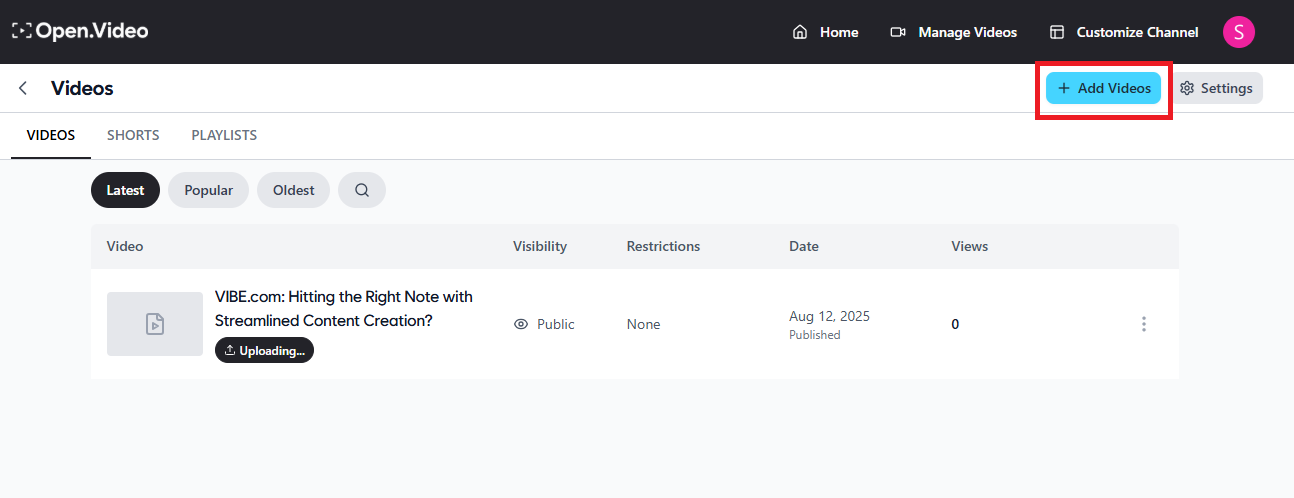
This opens up a new window, offering four different methods for uploading a video.

If selecting manual upload, users need to enter a name and description for the video.

The platform also allows users to upload videos from their existing YouTube channel into the Open.Video library, which can then be embedded with a video placeholder inside posts or pages. Even if their AdSense account remains their primary video setup, your YouTube channel should be configured in the Settings when you first set up your profile for this to happen, of course.
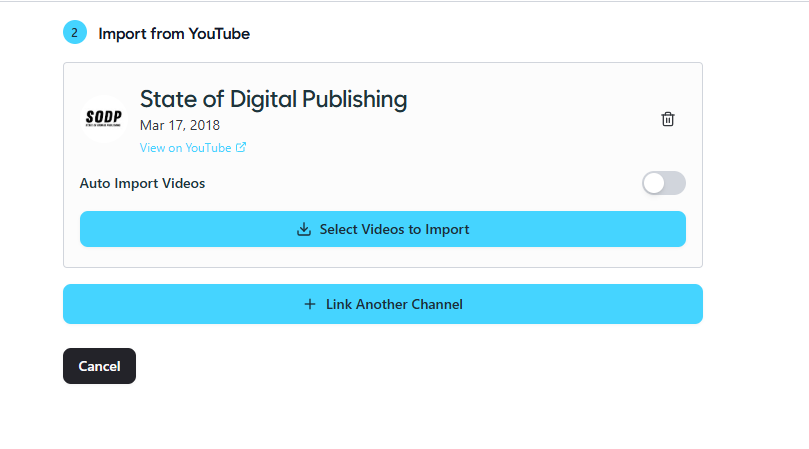
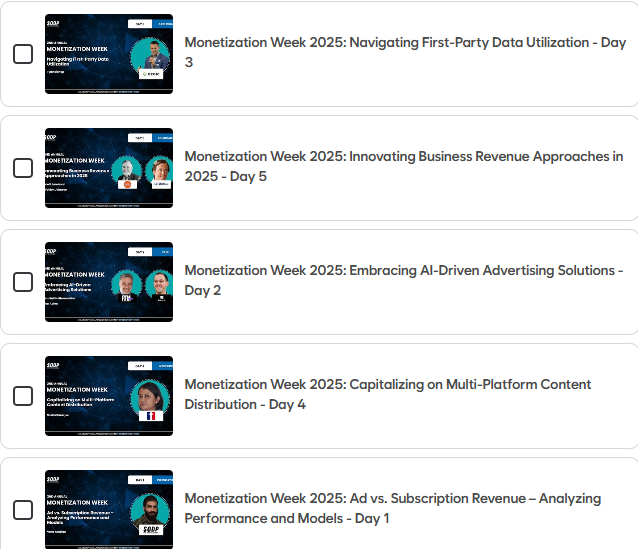
Uploading to the Open.Video platform is fast, and once a video is uploaded, the platform displays a success message.
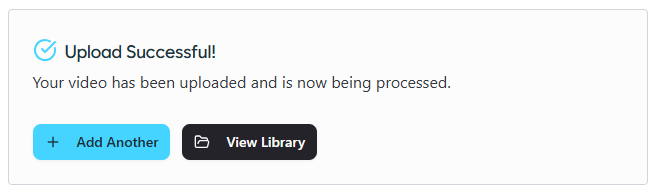
Once uploaded, all videos appear in the video library.

How to Host Videos on Your Own Website
You can integrate your Open.Video channel into your site in two straightforward ways. For WordPress users, the Open.Video plugin makes setup quick—just install, activate, connect your channel, and set the directory where it will live (for example, yoursite.com/videos).
For those on custom sites, a CNAME record can map a subdomain (such as video.yoursite.com) directly to your channel, creating a fully branded hub.
Once integrated, every video you upload is served from your domain, making it indexable by search engines so the SEO value flows to your site rather than third-party platforms. This ensures that both engagement and visibility stay in-house, strengthening your brand’s long-term digital footprint.

Customizing Your Channel Page
Open.Video also gives publishers the ability to fully customize their channel pages. From the dashboard, you can edit the look and feel of your video hub by updating colors, logos, and branding across both the player and the channel itself.
The platform includes multiple layout templates to choose from, allowing you to decide how videos are presented. Whether in a grid, featured spotlight, or other formats. This flexibility makes it easy to align the channel with your site’s overall design, so the video experience feels native rather than bolted on.

It also has a pretty neat Page Layout feature with a drag-and-drop editor that allows publishers to reorder the content sections of their homepage.

This is what our channel looks like, just in case you were curious.

Next Steps With the Dashboard
The platform provides tools to embed videos seamlessly into site pages, define ad breaks with a balance of automation and manual control, and track performance through analytics that highlight engagement and measure your site’s revenue. Together, these features move Open.Video beyond simple hosting, giving publishers practical ways to integrate video into their broader content and monetization strategy.
1. Analytics
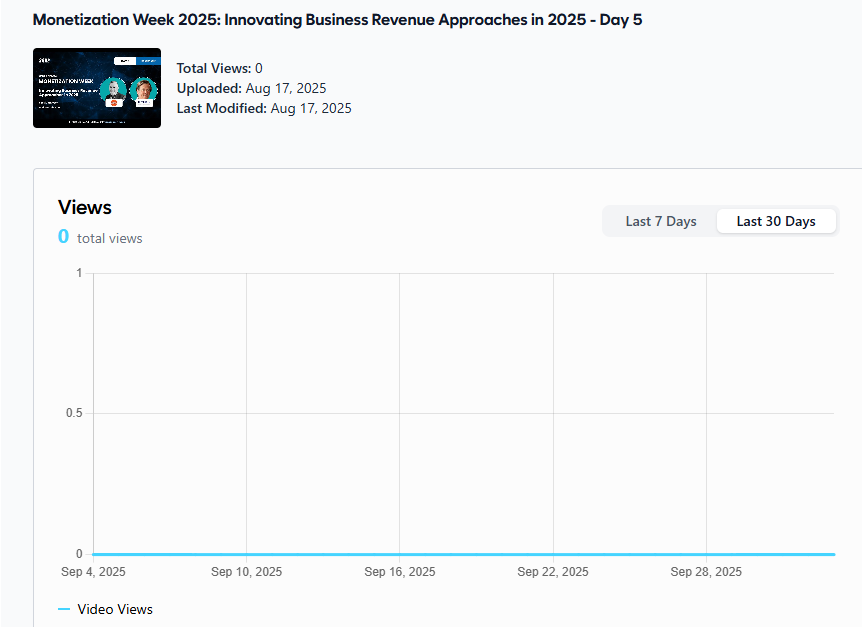
Open.Video’s analytics are designed to be simple and easy to interpret. Publishers can track the basics at a glance, including the following metrics:
- Total video views
- Total ad revenue
- Viewer locations
- Audience retention
- Viewers by country
For the channel as a whole, Open.Video also allows users to see their top trending videos from among all the videos they’ve uploaded.
This makes it straightforward to see how video contributes to overall site monetization without wading through overly complex reports.
For those who want even more granular insight into their viewership, Open.Video provides advanced analytics that let publishers access advanced metrics such as traffic source, average watch time, device type, views by video player type and more.

Publishers can even export these analytics in their preferred format, such as Excel file, CSV or Google Sheets.
That said, the analytics are relatively limited compared to what YouTube provides. Viewer demographic data is the main gap here. While Ezoic shows the geographic location of viewers, it does not currently provide deeper insights such as age, gender, and subtitle language. For publishers who are used to YouTube Studio’s level of granularity, this can feel restrictive.
The trade-off is that Open.Video’s analytics focus squarely on revenue and engagement within the publisher’s own site rather than broad audience segmentation. For many site owners, this narrower view is enough to measure what matters most: whether videos are helping users stay longer, view more content, and generate additional ad income.
Because engagement and monetization stay on the publisher’s domain, the platform directly contributes to overall Open.Video revenue, reinforcing the value of keeping video on-site rather than on YouTube.
2. Embedding Videos

To embed any of your uploaded videos on a webpage, click on the three dots menu on the far right, select Copy Embed Code, and paste this code wherever you want the video to appear on your article or blog post.
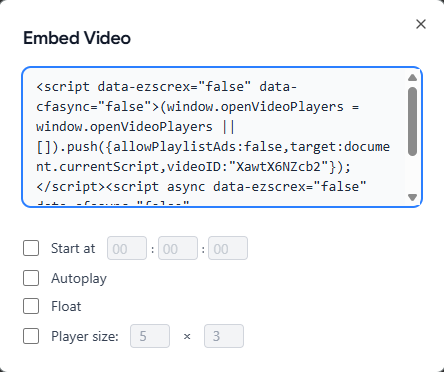
You can also set the time at which you want the video to start each time the page loads. Another cool feature here is the ability to change the size of the video player relative to your page. Again, this is something publishers don’t get with third-party platforms such as YouTube.
Because the video plays through Ezoic’s system on your domain, ads are served automatically based on your site’s ad settings. Engagement, SEO value, and ad revenue all flow back to your site rather than YouTube.
3. Custom Ad Breaks
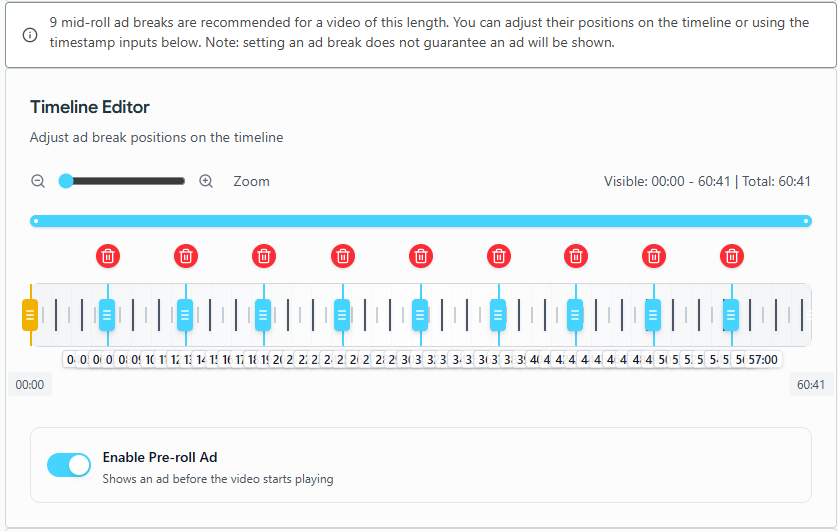
One of the standout features of Open.Video is the ability for publishers to control exactly where ad breaks appear within their videos. Unlike YouTube, where mid-roll ads are automatically placed by the platform, Ezoic gives site owners the freedom to decide whether an ad appears at a natural pause, a scene change, or after a certain amount of watch time. This creates a smoother viewing experience and reduces the risk of ads cutting off important moments.
Ezoic also provides guidance on best practices. The system analyzes video length and automatically suggests the optimal number of ad breaks to maximize revenue without overloading the viewer. For example, a two-minute video might only warrant a single pre-roll, while a ten-minute video could support multiple mid-rolls spaced at natural intervals. Publishers can accept these recommendations or override them completely based on their audience and content style.
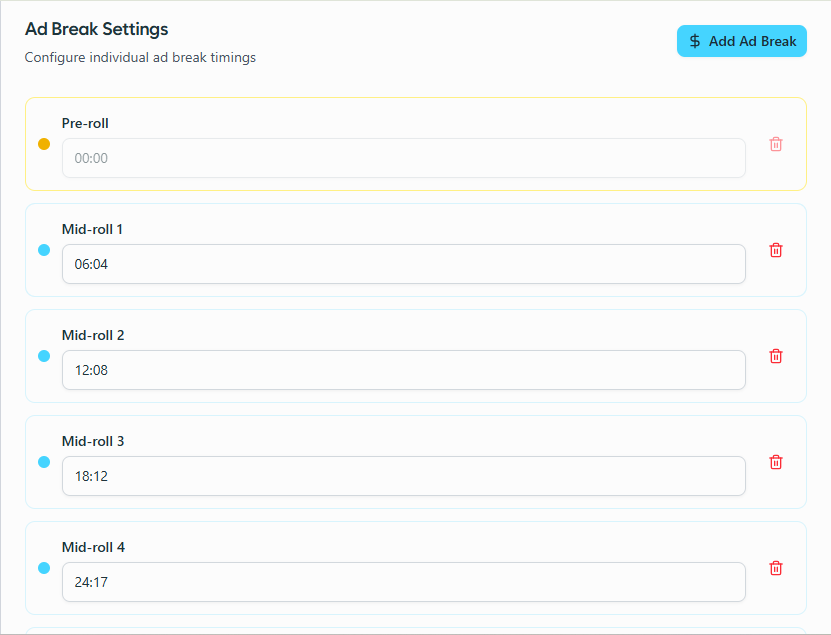
A simple scenario shows how this works in practice: imagine a travel blogger uploading a 12-minute city guide. They can choose to run a short pre-roll ad before the introduction, place a mid-roll ad right after the first major landmark segment, and add another mid-roll later before the food and nightlife section. The result is that ads appear in places where the viewer naturally expects a pause, maintaining flow while still delivering strong monetization.
This balance of automation and manual control means that creators are not locked into a one-size-fits-all approach. They can prioritize viewer experience or revenue optimization as they see fit, something that simply isn’t possible on YouTube.
Open.Video in Review
Open.Video is positioning itself as an alternative to YouTube. For publishers, the real question is whether its benefits outweigh the trade-offs compared to relying on YouTube or other hosting solutions. Here’s a quick look at what stands out and where the platform still has room to grow.
What We Love About Open.Video
- Easy integration with existing Ezoic accounts with no extra subscription needed.
- Videos hosted on publishers’ sites, keeping SEO and engagement value in-house.
- Monetization begins immediately with no eligibility thresholds.
- Flexible ad placement with smart recommendations from Ezoic.
- Straightforward dashboard for uploading, embedding, and managing videos.
- Offers a built-in video ad network based on the Humix platform, allowing publisher videos to play across other participating Ezoic sites, giving them extra reach
Where There’s Room for Improvement
- Analytics are limited compared to YouTube, especially when it comes to user demographics such as age and gender.
- Doesn’t support MKV uploads, which some creators rely on when recording with OBS or editing with tools like HandBrake.
- Smaller discovery potential compared to YouTube’s algorithm-driven ecosystem.
- Upload and processing are efficient, but transcoding options are less transparent.
- Branding options for the video player are limited, making customization harder.
Open.Video represents a solid step forward for publishers who want to bring video hosting and monetization under their own control. While it can’t yet match YouTube’s reach or detailed analytics, it offers something YouTube doesn’t: a site-first approach that keeps SEO value, engagement, and revenue with the publisher.
By bundling Ezoic ads with hosting, flexible ad space controls, and the ability to integrate with other ad networks, the platform makes video feel like a natural part of a publisher’s strategy rather than an external dependency.
Overall, Open.Video is a promising solution for publishers who want video to serve their site’s revenue, and not someone else’s platform.